
Traditional Meaning vs Personal Intuition
Read the video transcript
Here is one card: the Hermit. Every reading draws on three sources: what tradition says, what the picture shows, and what you feel. Tradition says the Hermit speaks of solitude, reflection and inner guidance, the quiet light we carry inside.
Look closer: he holds his lantern out, as if lighting the way for someone else. The Two of Cups means partnership. The picture adds more: two equals, each giving, each receiving.
Intuition is your own response, a memory or a feeling. It may say more about you than the question. The Moon unsettles some people and enchants others.
That difference lives in the reader. So name each idea: tradition, image, or intuition. Use all three, and always know where each meaning came from.
Every reading draws on three sources: what tradition says about a card, what you can see in the picture, and what you personally feel. All three are useful. Problems start when you can’t tell which one you’re using.
When you say something about a card, it comes from somewhere. Sometimes it’s what generations of readers have said. Sometimes it’s something in the picture. Sometimes it’s a feeling of your own. None of these is better than the others, but they’re not the same thing, and a good reader always knows which one is speaking.
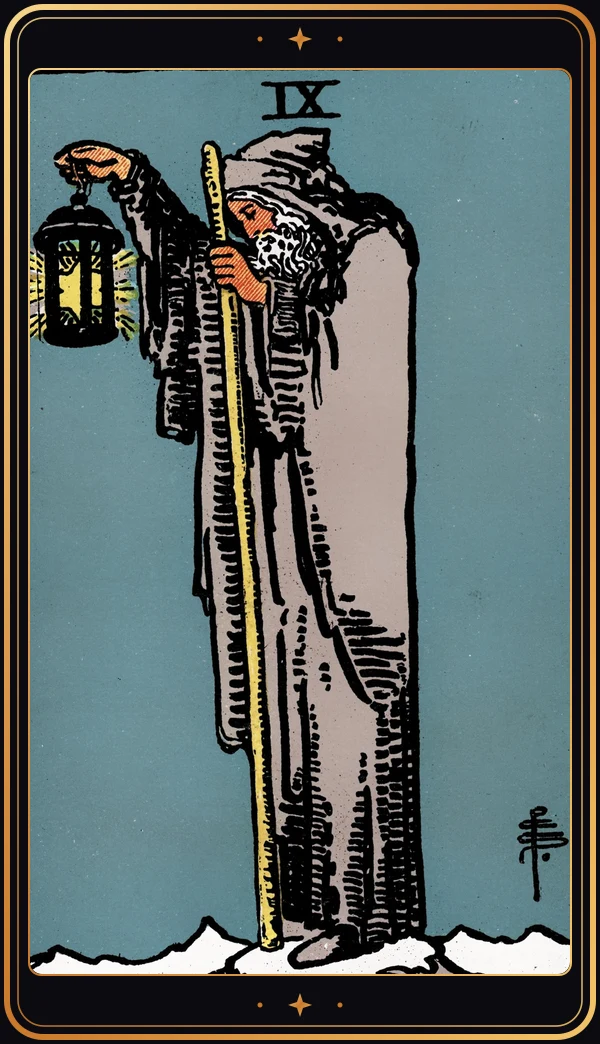
Traditional meaning is what readers have associated with a card over time. For the Hermit, that’s solitude, reflection and inner guidance. Tradition gives you a shared language, so your readings don’t become random, and it lets you talk about a card with other readers and be understood.
The image is what you can actually see. The Hermit stands alone on a snowy peak, holding up a lantern with a star inside, leaning on a staff, head bowed. Observation can confirm tradition, or add to it. Notice that the lantern is held out, as if lighting a path for someone else too. That detail isn’t in most keyword lists, but it’s right there in the picture.
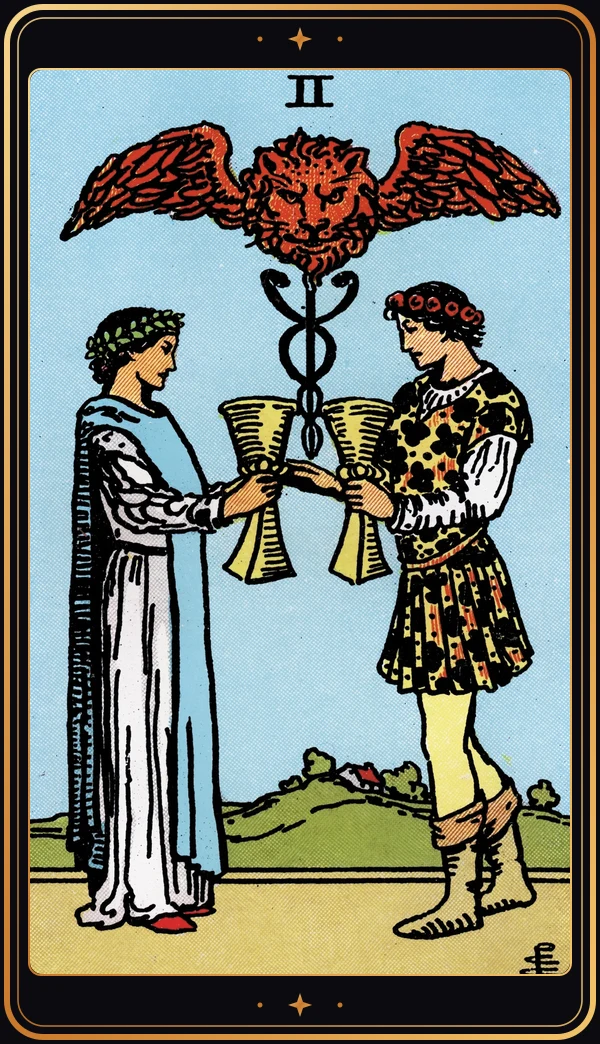
The image can also shift what tradition says. The Two of Cups is traditionally about partnership and connection. Look closer: two figures face each other at the same height, each offering a cup, while a winged lion’s head watches over them. The picture adds something the keyword doesn’t: they’re equals, each giving and each receiving.
Intuition is your own response: a memory, a feeling, a sudden association. Perhaps the Hermit reminds you of a teacher you respected, or of a quiet winter you once spent alone. That reaction can be valuable. It often points to what matters to you. But it may also be about you rather than the question.
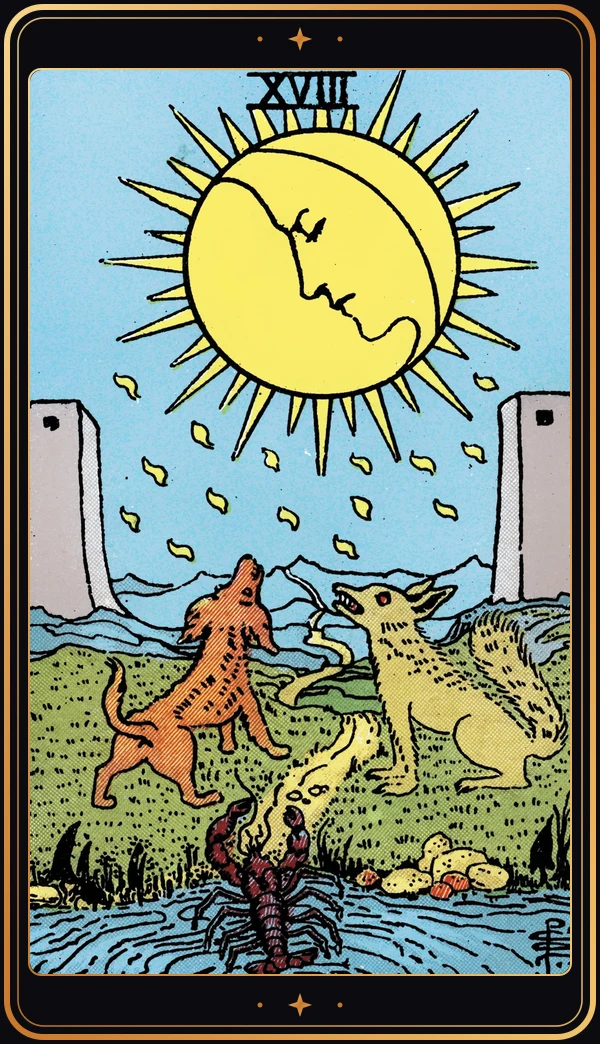
The Moon shows how strong intuition can be. Tradition links it with uncertainty, dreams and things not yet clear. The image shows a moon with a face, a dog and a wolf howling at it, and a crayfish crawling from the water onto a path between two towers. Some people feel uneasy the moment they see it; others find it magical. That difference isn’t in the card. It’s in the reader.
A helpful habit is labelling. When you say something about a card, ask: is that tradition, image or intuition? “The Hermit suggests time alone” is tradition. “He’s lighting a way” is image. “He feels lonely to me” is intuition. All three can sit in one reading, as long as they’re honestly named.
Different schools weigh these differently. Some readers lean on fixed meanings, others on pure intuition. Each has a blind spot: fixed meanings can ignore the picture in front of you, and pure intuition can drift away from it. This course asks you to use all three, and to be able to say where each idea came from, especially when they disagree. You’ll use all three in every reading that follows, and our full course, Intuition Without Guesswork, takes this much further.
Your exercise
Practise naming the source. For each statement about a card, decide: does it come from tradition, from the image, or from intuition? You’ll see straight away if you’re right.
Key takeaways
- 1Tradition, image and intuition are three different sources of meaning.
- 2Tradition gives a shared language; the image confirms it or adds something new.
- 3Intuition often shows what matters to you, and may say more about you than the question.
- 4Label each idea with its source as you interpret.
- 5A good reading uses all three and can say where each idea came from.