
Reading the Court Cards
Court cards are often the ones beginners dread. They look like portraits, and it isn’t clear who they are. Two ideas make all sixteen easier: rank and suit.
Why court cards feel hard
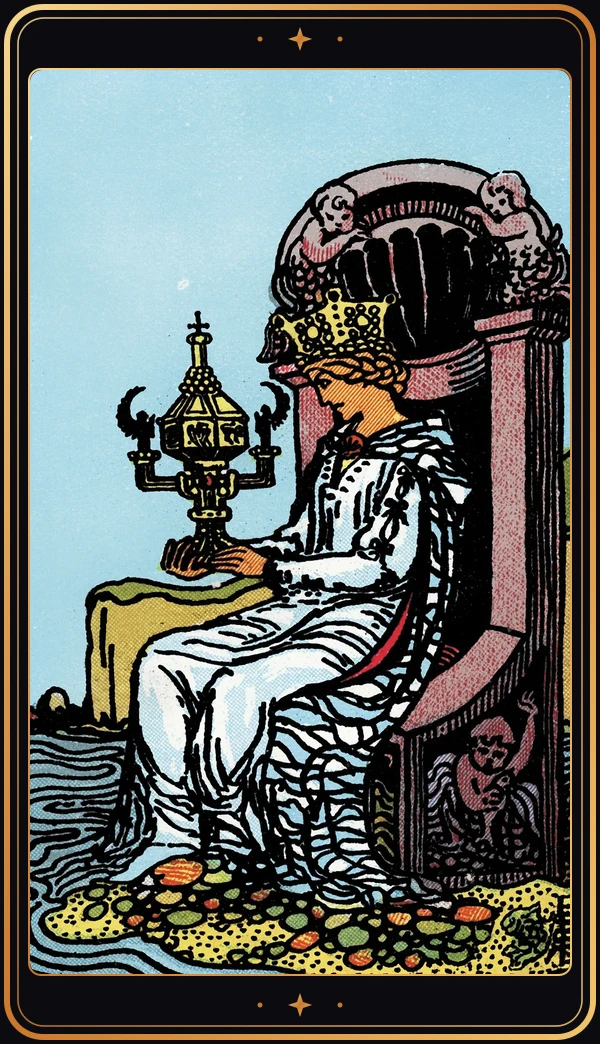
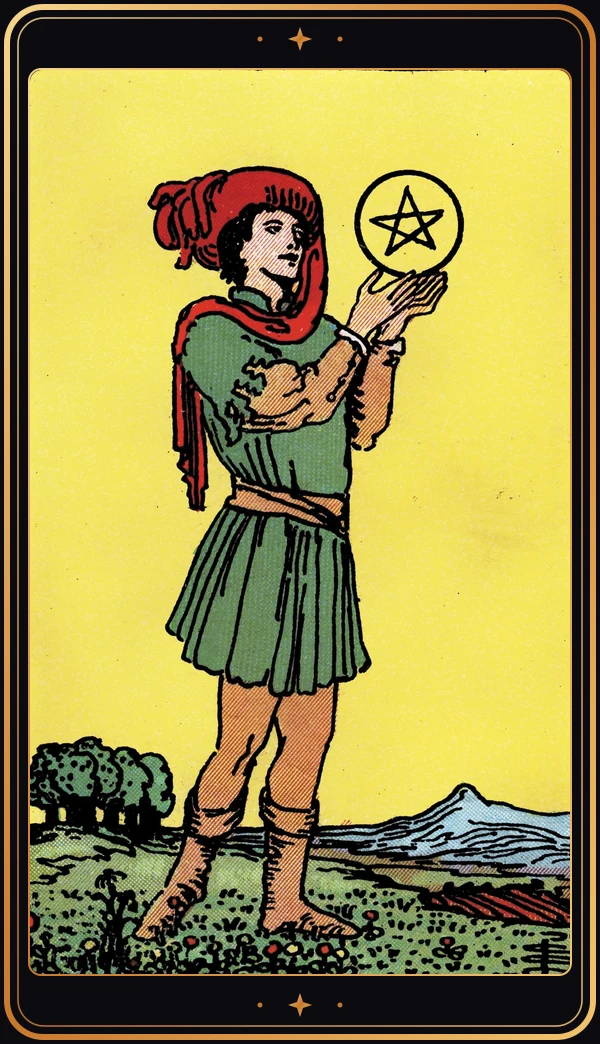
There are 16 court cards: a Page, Knight, Queen and King in each suit. Unlike the numbered cards, most show one figure, posed, with little action. The Queen of Cups sits by the sea, gazing at a covered cup. The Page of Pentacles stands in a field, gazing at a coin. Beautiful, but what are they about?
The stageRank
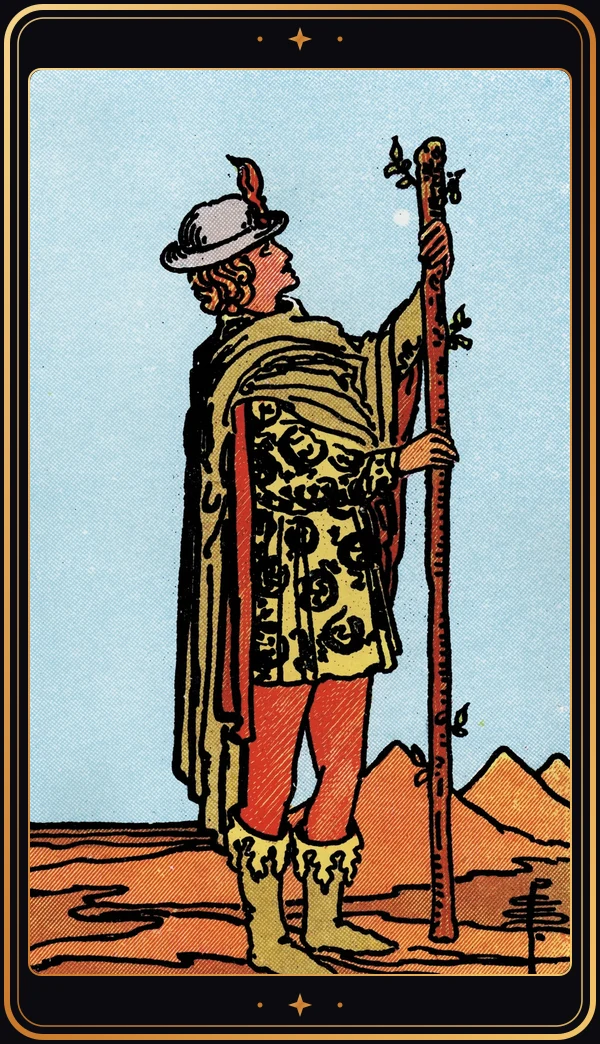
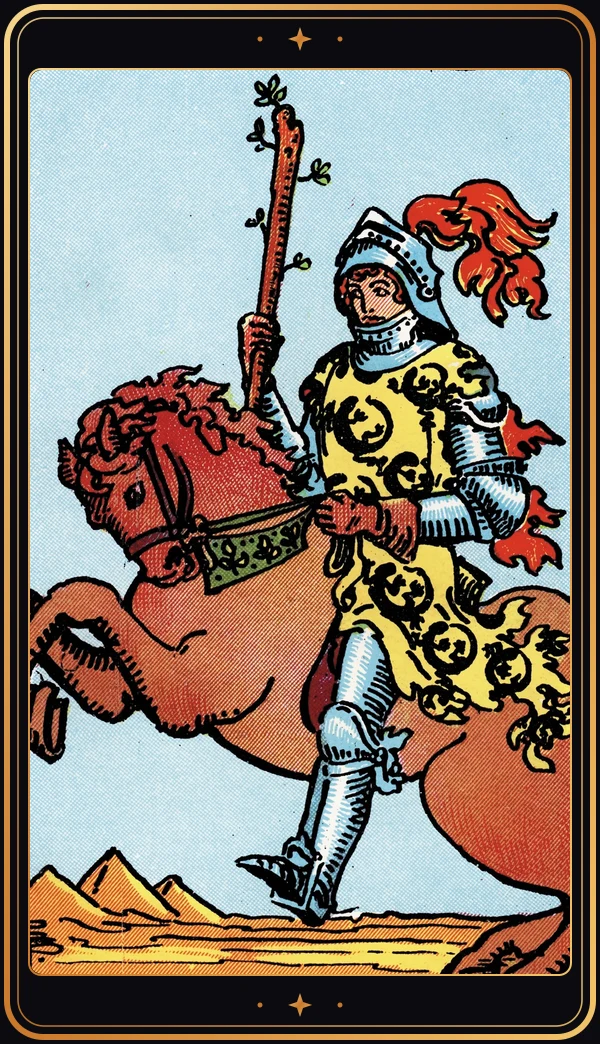
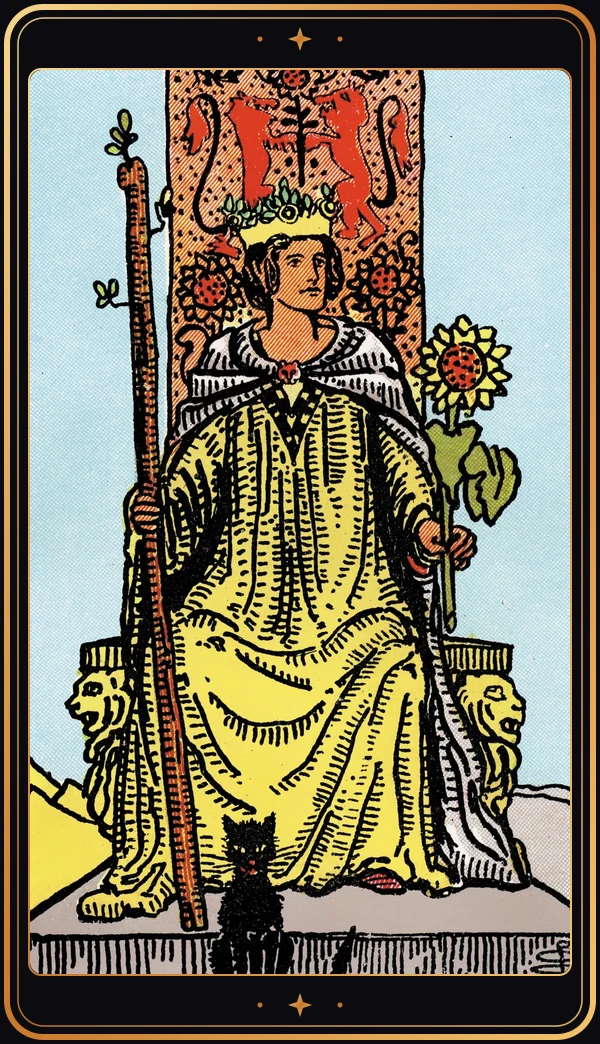
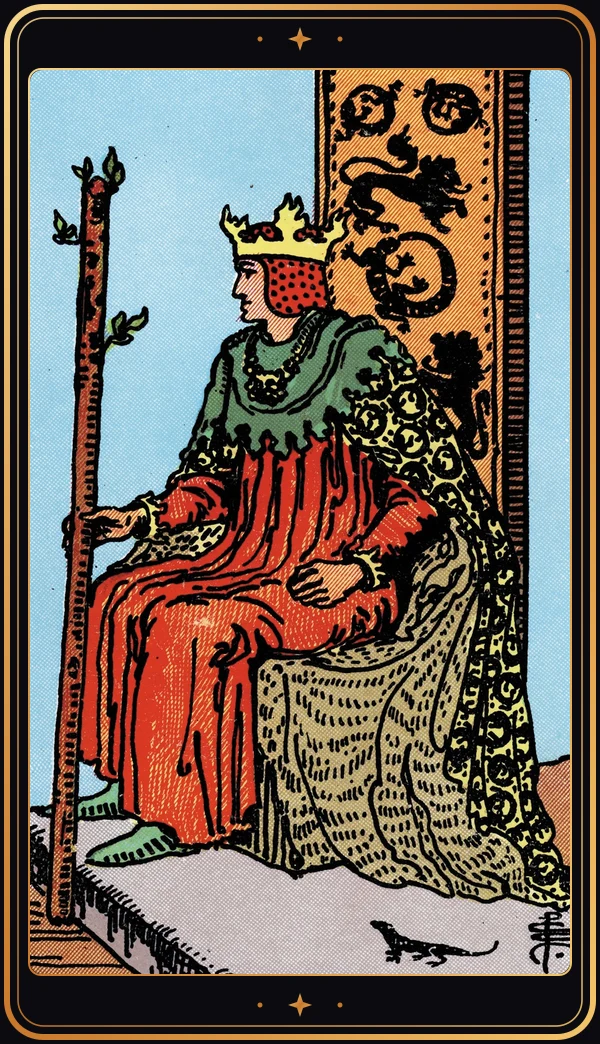
Rank tells you the stage. The Page is learning. The Knight is pursuing. The Queen understands the suit from within. The King leads with it in the world.
The area of lifeSuit
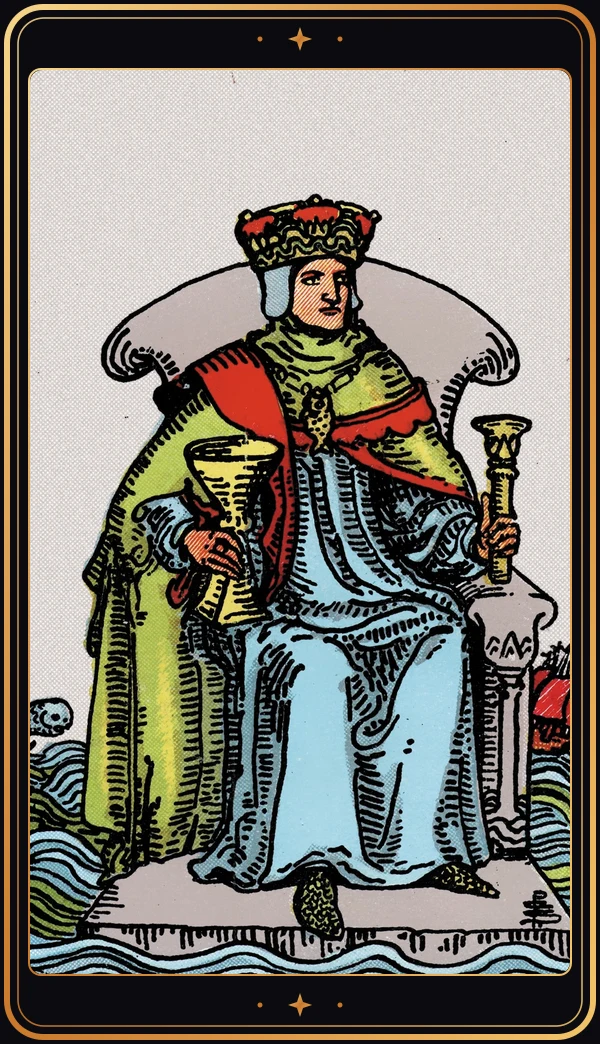
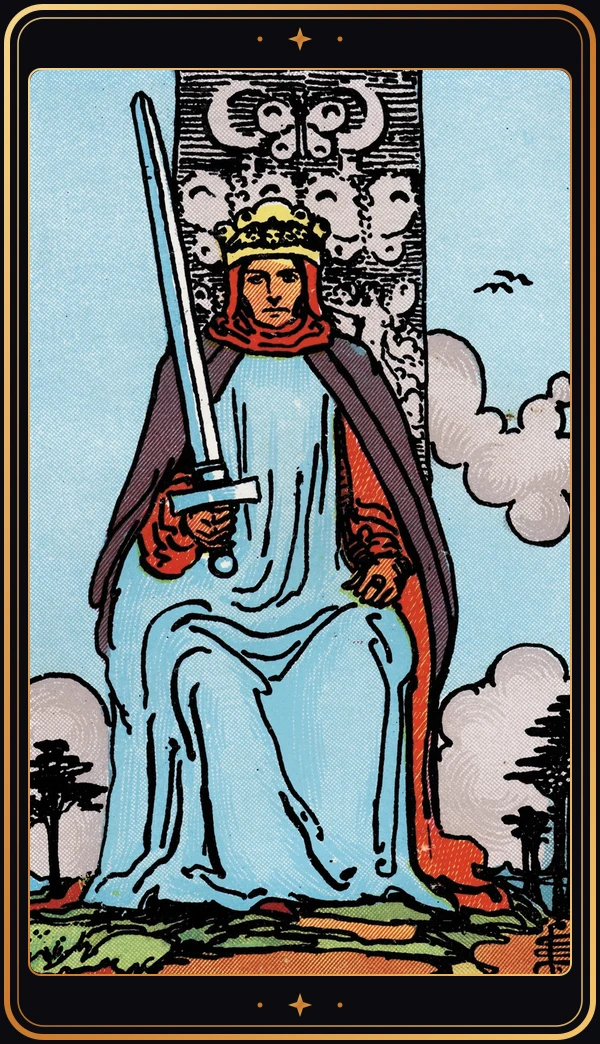
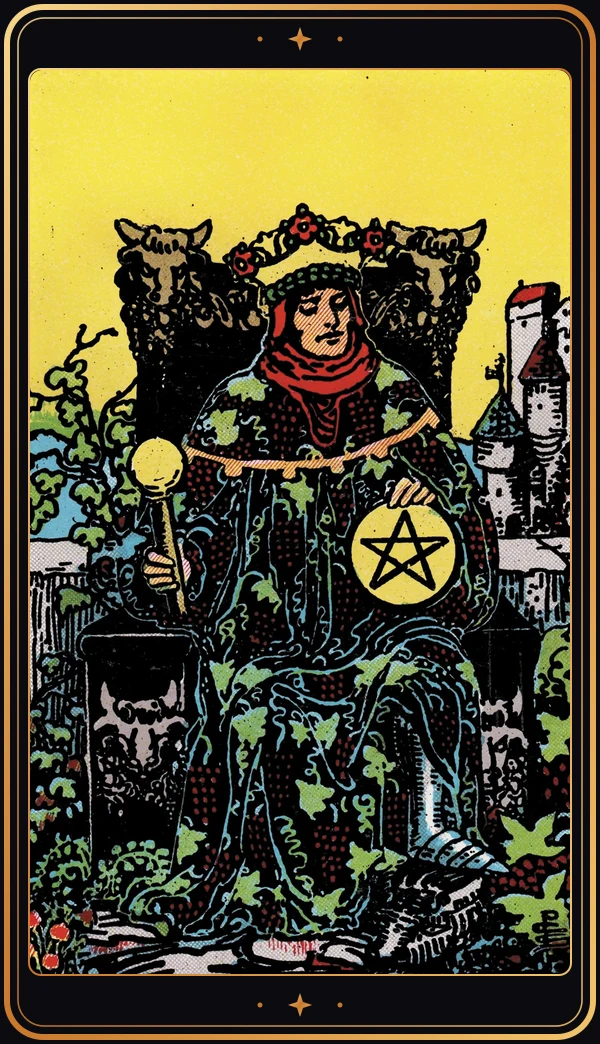
The suit adds the area of life you already know. Compare the four Kings: same rank, four ways of leading. Wands lead with vision, Cups with calm feeling, Swords with clear thinking, and Pentacles with steady provision.
Three ways to read one
Older books often treated court cards as specific people, down to their age, gender and hair colour. That makes readings narrow, and it doesn’t fit everyone. A court card can be a person in your life, a behaviour someone is using, or a quality growing in you. A King can be anyone who leads. A Page can be anyone learning.
Putting it together
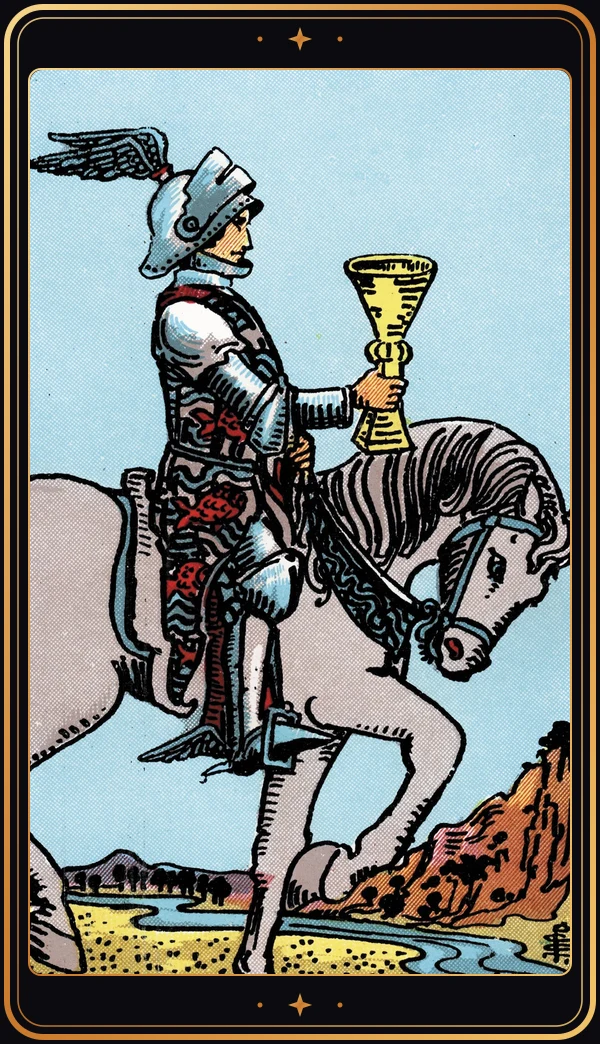
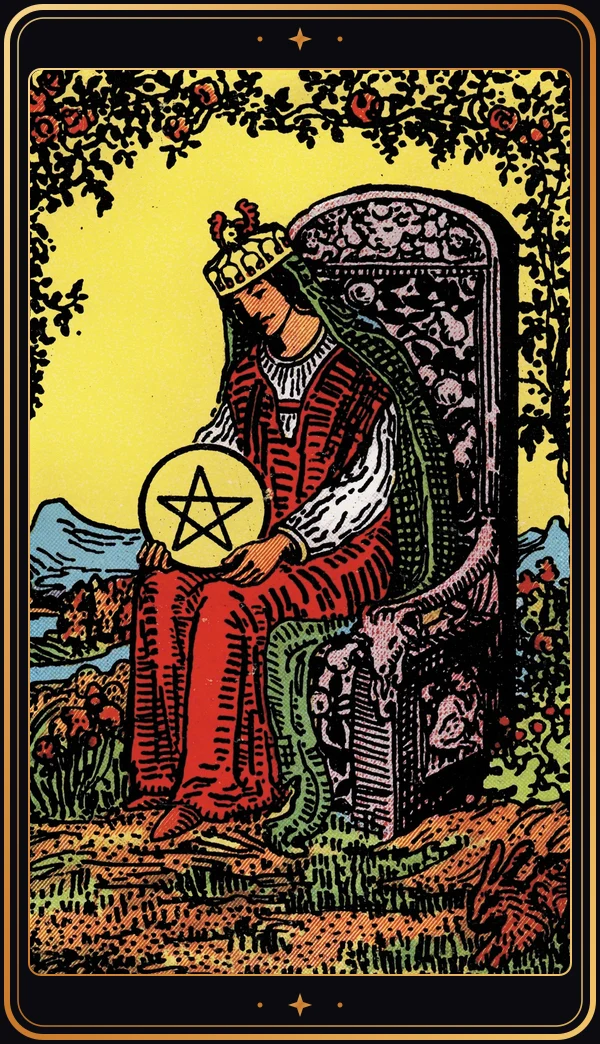
Put rank and suit together, then check the picture. The Knight of Cups is pursuit plus feeling: following the heart. His horse walks and he holds out a cup, so the picture adds gentleness. The Queen of Pentacles is understanding plus practical life: grounded care, and her garden agrees. The formula gives you a start; the picture refines it.
Your exercise
Practise reading a court card three ways. For each reading, decide: is it a person in your life, a behaviour, or a quality in you? You’ll see straight away if you’re right.
Key takeaways
- 1There are 16 court cards: a Page, Knight, Queen and King in each suit.
- 2Rank gives the stage; suit gives the area of life.
- 3Read a court card as a person, a behaviour or a quality in you.
- 4Court cards aren’t tied to any gender, age or fixed person.