


Why Numbers Matter
You don’t have to learn 40 numbered cards one by one. Each number from Ace to Ten carries a theme that repeats in every suit. Learn ten patterns, add four suits, and you have a starting point for all 40.
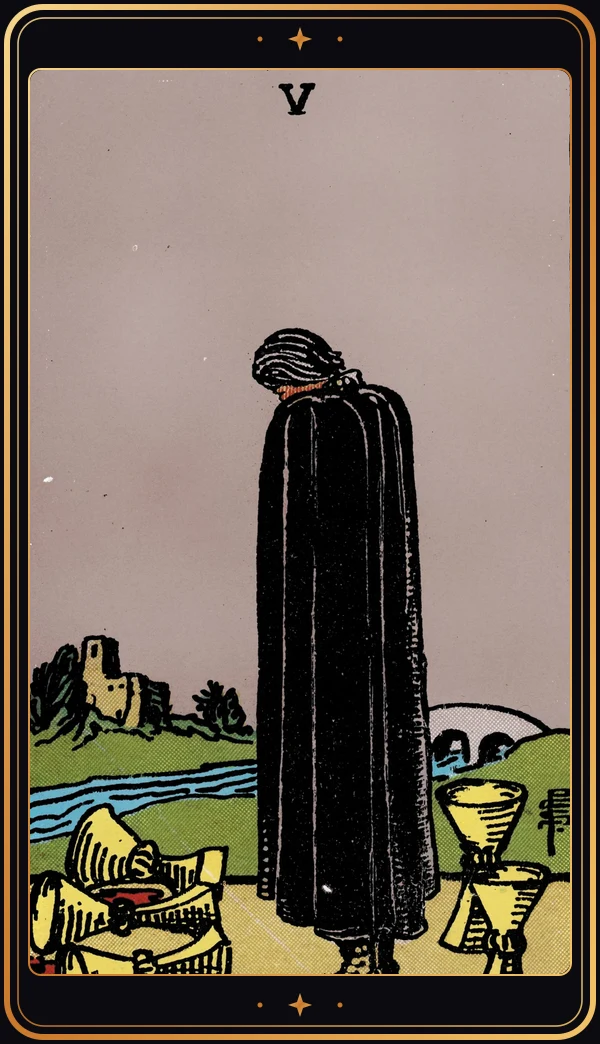
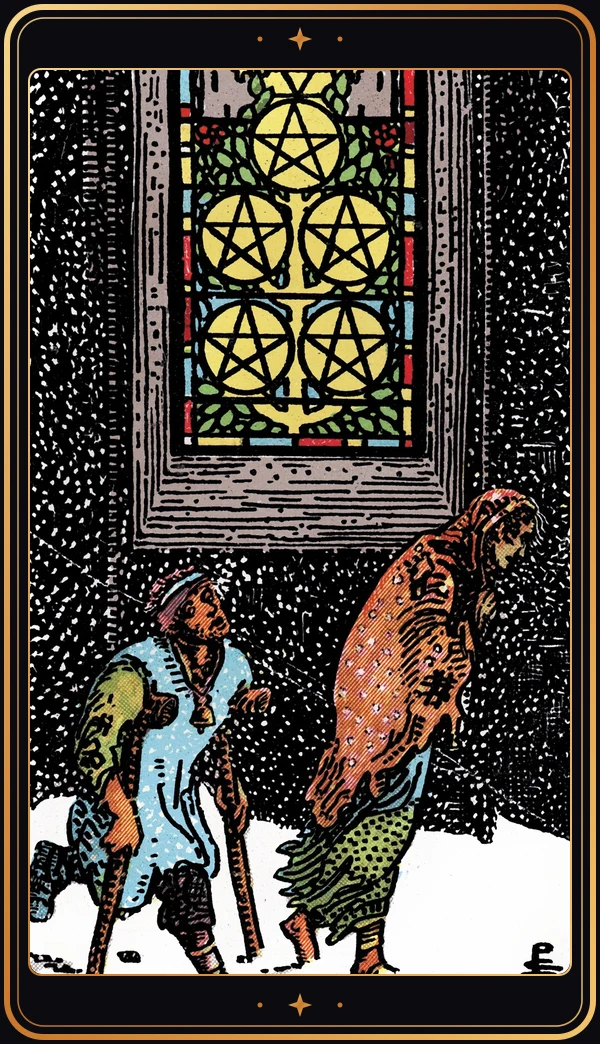
Look at the Five of Cups and the Five of Pentacles side by side. In the first, a cloaked figure mourns three spilled cups. In the second, two people struggle through snow past a lit church window. Different suits, but both show something hard: loss, strain, being left out in the cold. That shared feeling is the number Five at work.
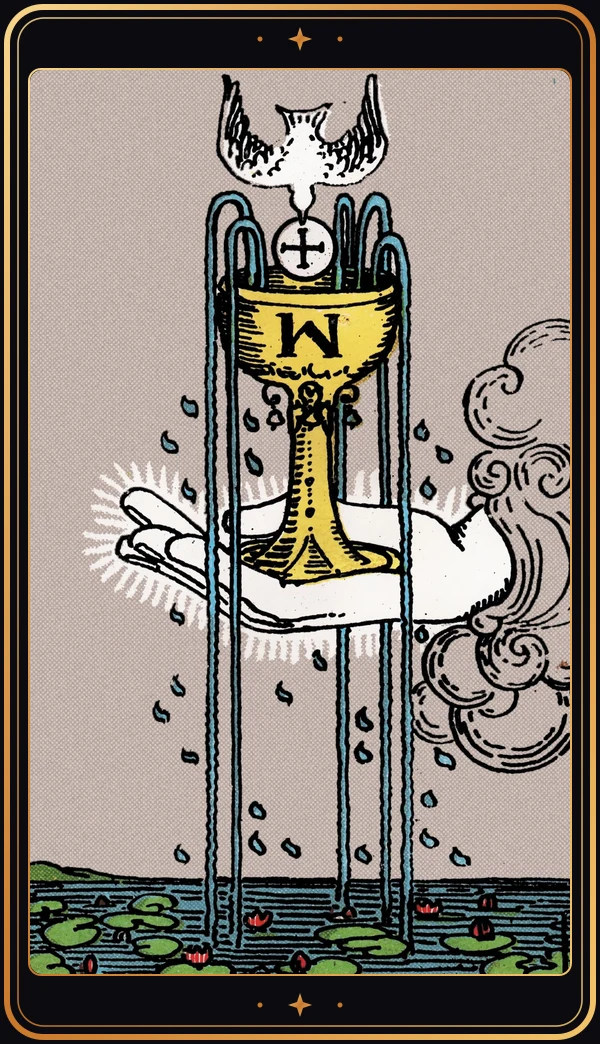
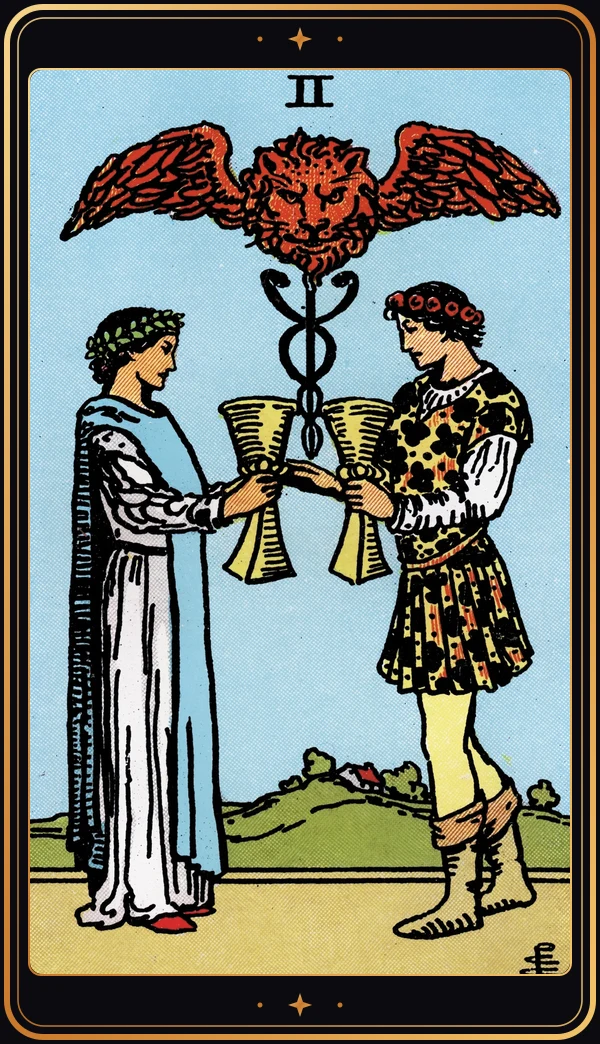
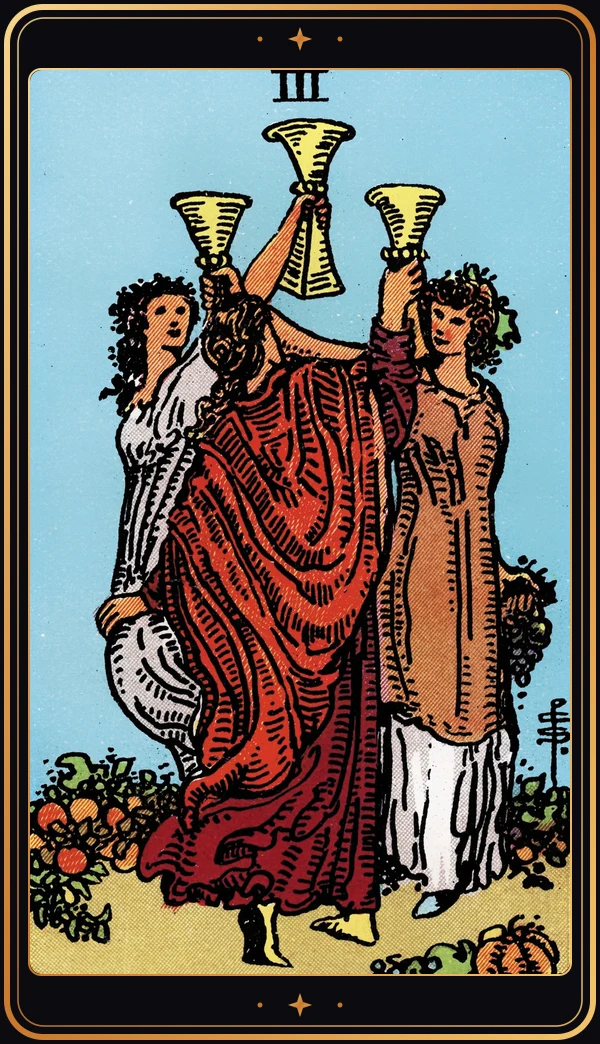
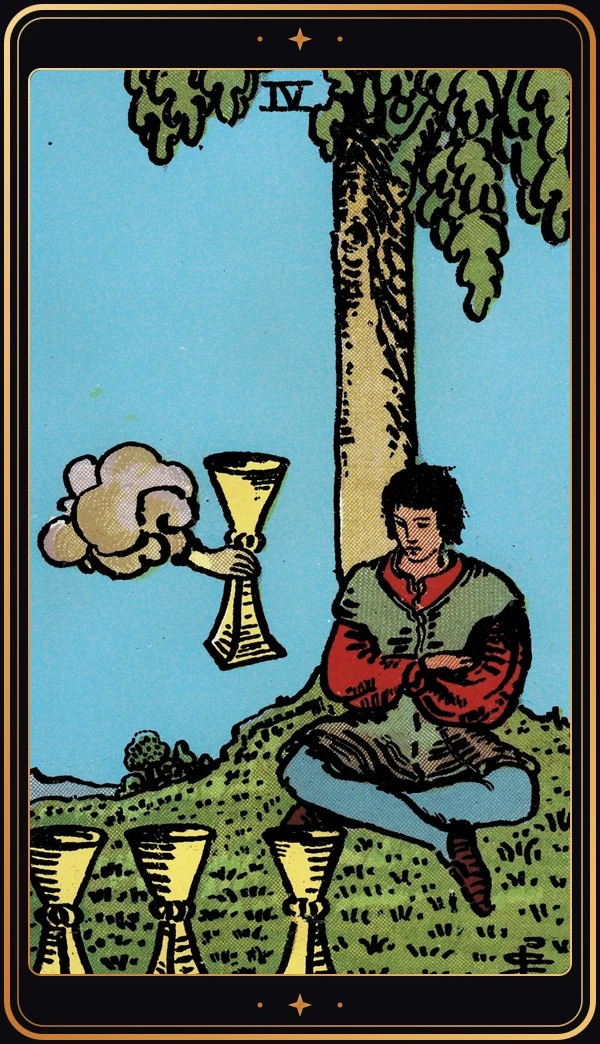
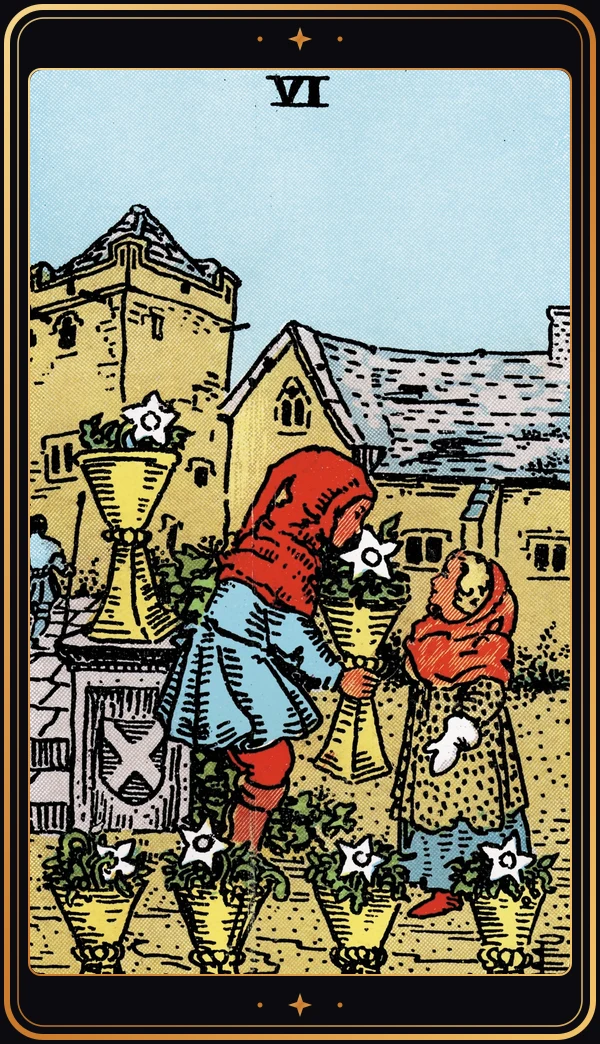
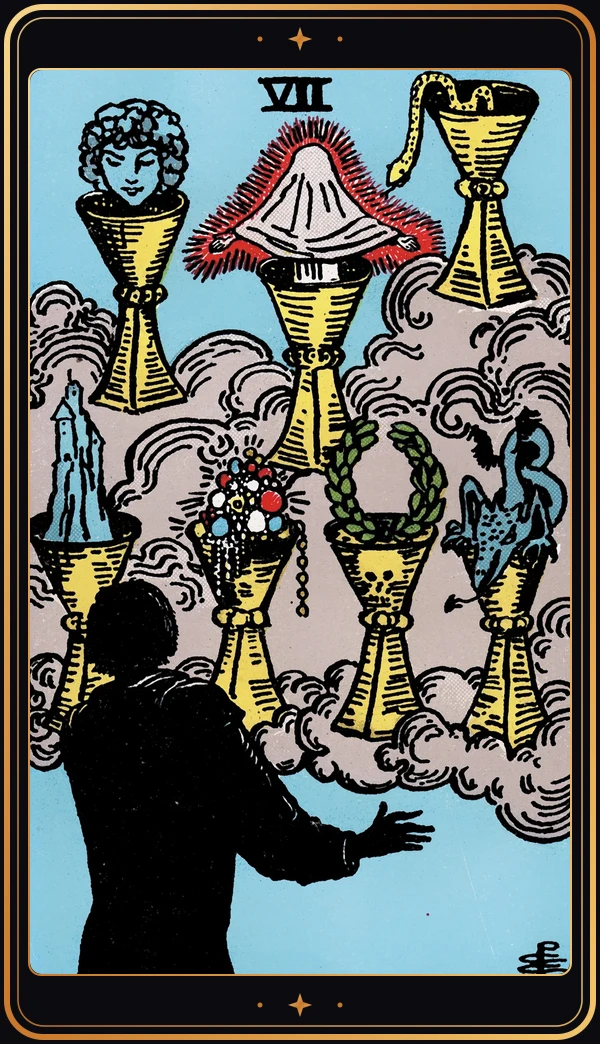

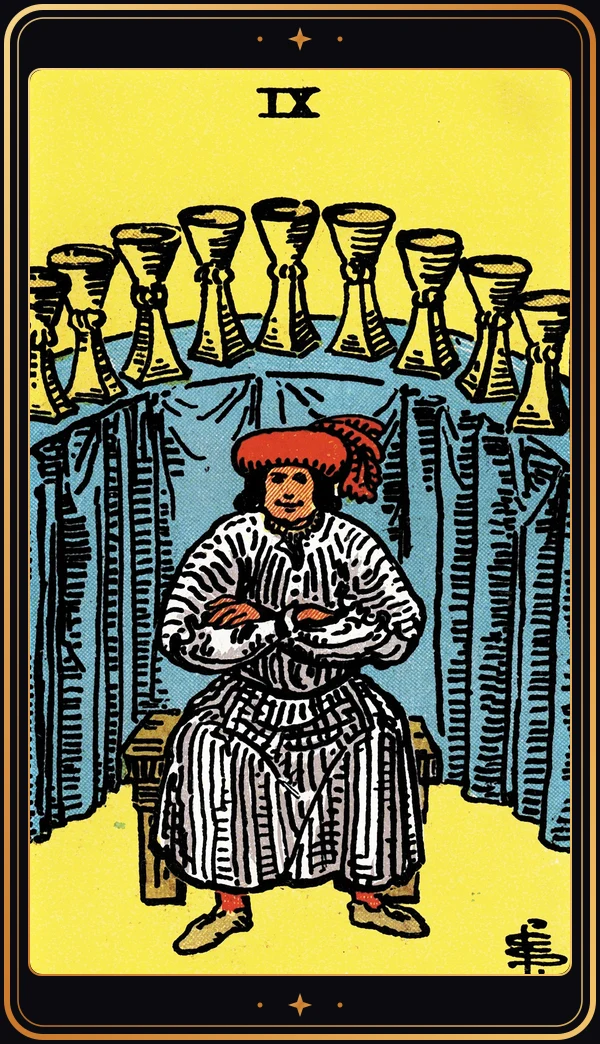
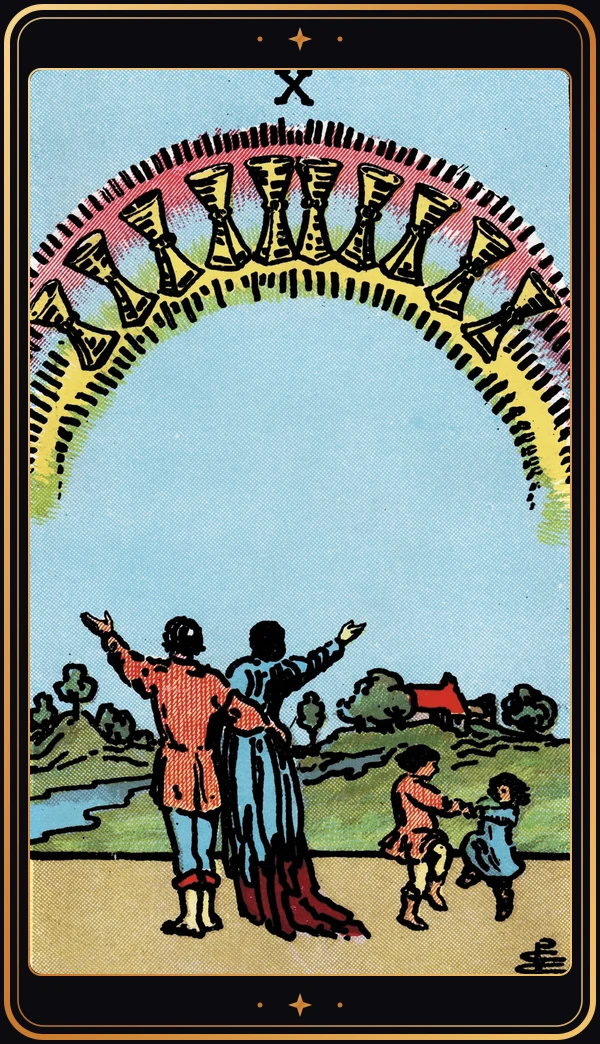
Many readers see Ace to Ten as one story that repeats in every suit. The Ace is potential, a seed. Two brings a choice or a partner. Three, growth. Four, structure. Five, disruption. Six, exchange. Seven, a test. Eight, effort and movement. Nine, a peak. Ten, completion, and the start of what comes next.
The story falls into three stages. Ace to Four builds something. Five to Seven tests it. Eight to Ten carries it to the end. The next three lessons take one stage each. When you meet a card you don’t know, its number tells you roughly where it sits in its suit’s story.
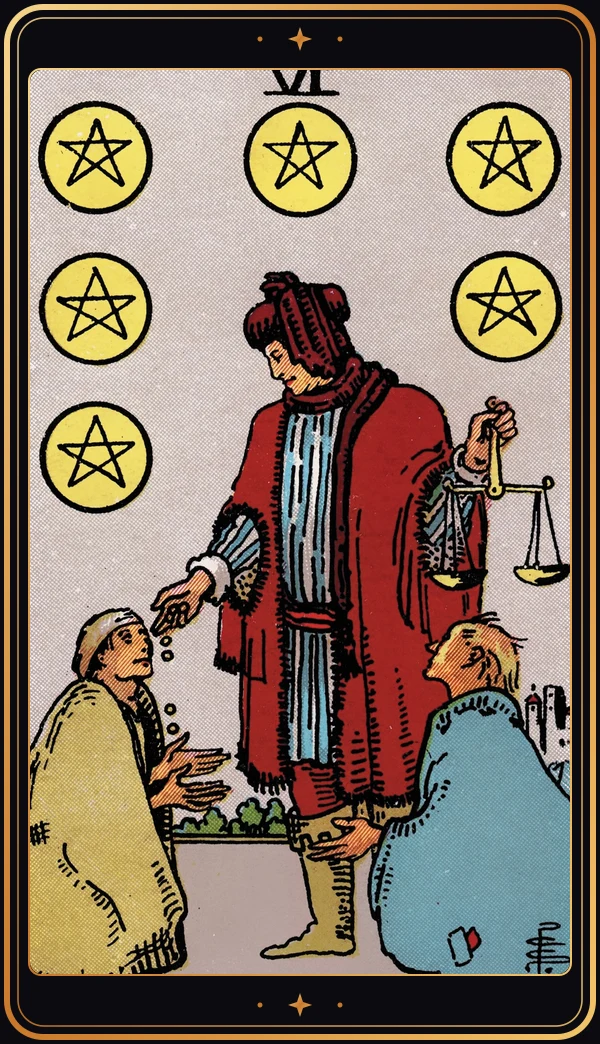
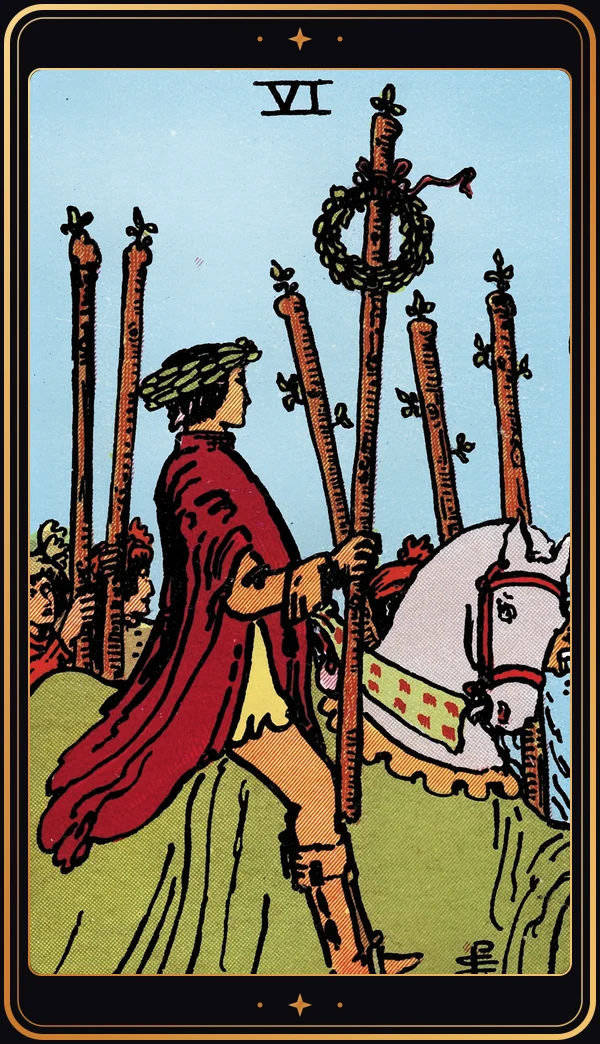
A word of care: these are patterns, not laws. The Six of Pentacles shows giving and receiving, which fits exchange, but the Six of Wands is a victory parade. The number is a lens, and the picture always gets a vote.
Your exercise
Practise placing numbered cards. For each card, decide: which part of the Ace-to-Ten story is it in? You’ll see straight away if you’re right.
Key takeaways
- 1Each number repeats its theme across all four suits.
- 2Ace to Ten is one story: Ace to Four builds, Five to Seven tests, Eight to Ten finishes.
- 3The number tells you roughly where a card sits in its suit’s story.
- 4The number is a lens; the picture always gets a vote.