Why the Major Arcana Is Different
Read the video transcript
A tarot deck has two parts: fifty-six Minor cards in four suits, and twenty-two Major cards in one long sequence. The Majors have no suit. Each has a name, and a lesson: courage, honesty, change, hope.
Look at Justice. A crowned figure sits between two pillars, a sword held straight up, scales in the other hand. Nothing is happening to anyone.
It feels like a principle, not an event: fairness, truth, accountability. The Two of Swords is one person, blindfolded, arms crossed, stuck on a choice they can’t yet look at. Both cards involve a choice.
The Minor card is this week’s decision. The Major card is the bigger theme behind it. Even the Tower isn’t a forecast of disaster.
It’s sudden change, when something built on shaky ground gives way. Say you keep arguing with a flatmate about chores, and you draw Justice. It doesn’t say things will end badly.
Its scales ask what a fair split would look like, and its upright sword says: talk about it, clearly and openly. So when a Major card turns up, don’t panic and don’t shrink it. Ask what bigger pattern you’re part of.
The Major Arcana are the 22 cards with their own names, from the Fool to the World. They often carry more weight in a reading. Here’s what sets them apart, and how to keep that weight in proportion.
A tarot deck has two parts. The 56 Minor Arcana cards belong to four suits, Wands, Cups, Swords and Pentacles, and each has a rank, from Ace to King. The 22 Major Arcana cards belong to no suit. Each has its own name and its own place in a single sequence, from the Fool at 0 to the World at 21, and each shows one symbolic scene.
Because of that, they’re often read on a different scale. Where the Minor cards tend to show what we do, the Major cards tend to show what we’re learning: courage, honesty, change, hope. Many readers call them archetypes, patterns of experience most people recognise, whatever their life looks like.
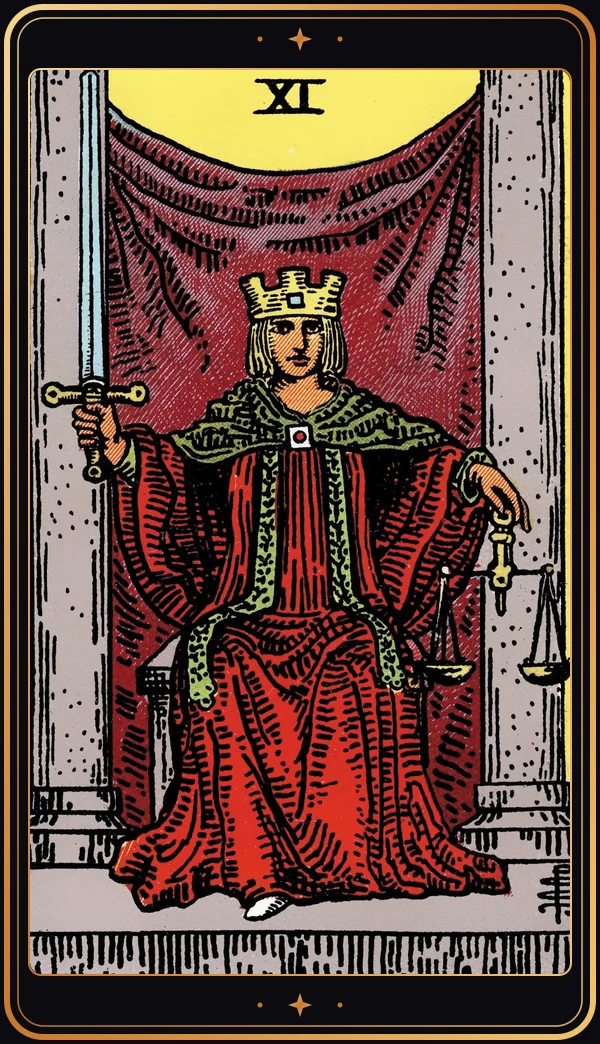
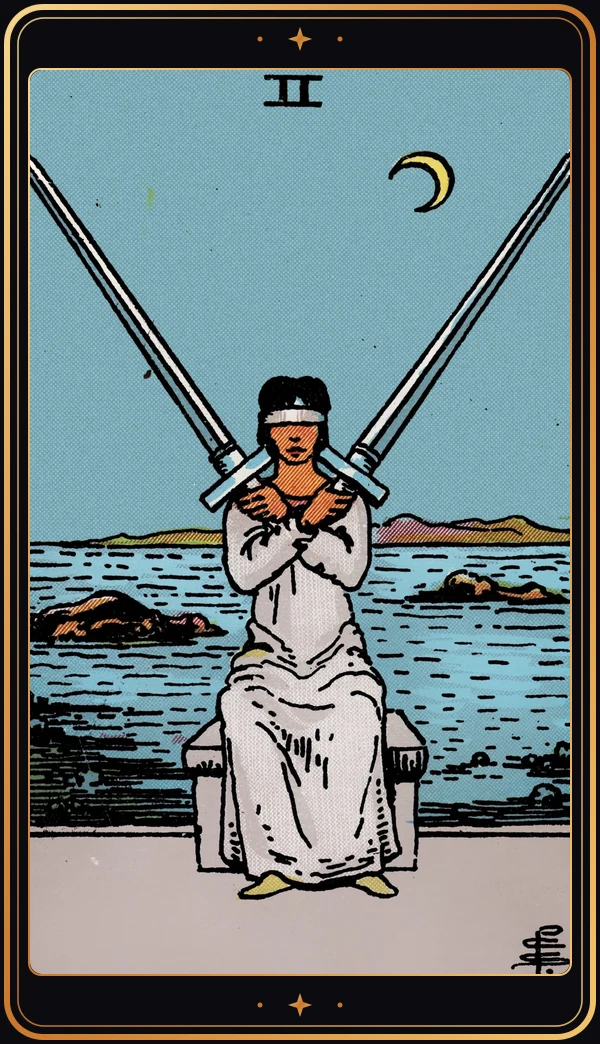
Compare Justice with the Two of Swords. In Justice, a crowned figure in a red robe sits between two stone pillars, facing you directly, with a sword held straight up in one hand and a pair of scales in the other. Nothing is happening to anyone. The scene is still and formal, more a principle than an event: fairness, truth, accountability. In the Two of Swords, one person in a plain white robe sits on a bench by the water under a thin crescent moon, blindfolded, arms crossed over their chest, holding two swords. It’s personal and of the moment: someone stuck on a choice they can’t, or won’t, look at yet.
Both cards involve swords and decisions, but the scale is different. The Two of Swords might describe a decision you’re facing this week, such as which of two job offers to take. Justice might point to the bigger theme behind it: weighing things honestly and taking responsibility for what you choose.
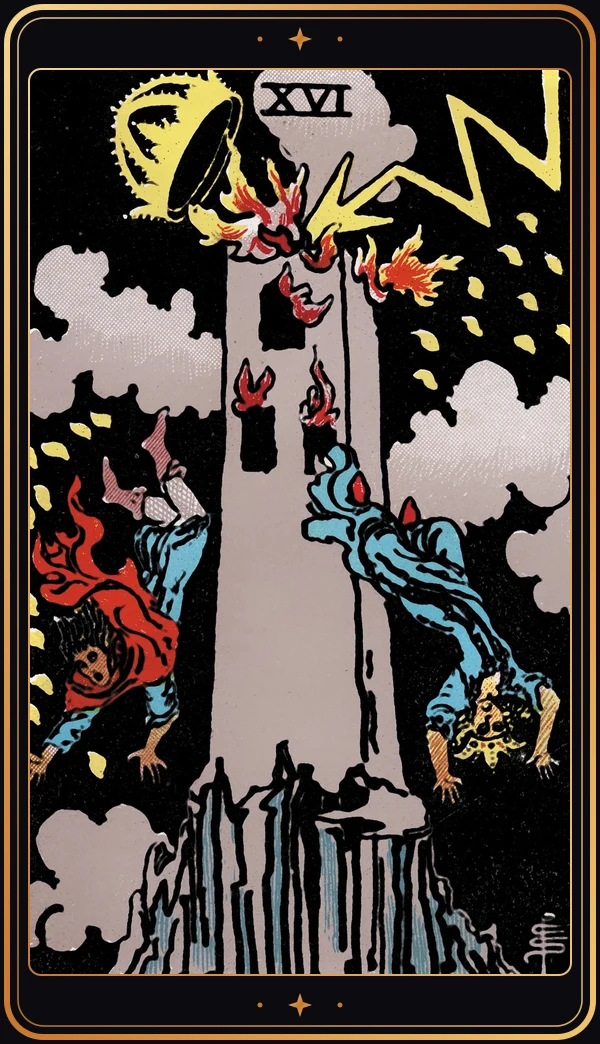
That weight is easy to overdo. A Major card isn’t a sign that something dramatic is about to happen, even when it looks dramatic. The Tower shows lightning striking a tall tower: its crown-shaped top is knocked off, flames burst from the windows and two figures fall. Readers don’t take it as a forecast of disaster; they usually read it as the theme of sudden change, when something built on shaky ground gives way.
So when a Major card turns up, don’t panic and don’t shrink it. Read its picture as you would any card, then ask: what bigger lesson or pattern might this situation be part of?
Your exercise
Practise finding the bigger theme. For each everyday situation on a Minor card, decide: which of the three Major cards points to the theme behind it? You’ll see straight away if you’re right.
Key takeaways
- 1The 22 Major Arcana cards belong to no suit: each has its own name and a place from the Fool (0) to the World (21).
- 2Minor cards tend to show everyday situations; Major cards point to the bigger theme or lesson behind them.
- 3A Major card adds weight to a reading but doesn’t predict drama, even when it looks dramatic.
- 4Read a Major card from its picture like any other card, then ask what bigger pattern the situation might be part of.