
The 22 Major Arcana at a Glance
Read the video transcript
Here are all twenty-two Major cards. You don’t need to memorise them: each theme grows from something you can see. The Fool at the cliff edge: beginnings.
The Magician’s full table: skill. The Priestess’s hidden scroll: intuition. The Empress’s wheat: growth.
The Emperor’s stone throne: order. The Hierophant’s blessing: tradition. The Lovers’ angel: choosing by your values.
The Chariot’s sphinxes: willpower. Strength calms a lion: gentle courage. The Hermit’s lantern: reflection.
The turning Wheel: cycles. Justice’s sword and scales: fairness. The Hanged Man, calm and upside down: a new angle.
Death’s white horse: endings that make room. Temperance’s two cups: balance. The Devil’s loose chains: habits you can lift off.
The Tower’s lightning: sudden change. The Star’s quiet pool: hope. The Moon: things not yet clear.
The Sun: joy. Judgement’s trumpet: a calling. The World’s dancer: completion, and a new start.
Twenty-two cards, one journey, from the Fool’s first step to the World’s dance. Next, we’ll read them together as a story.
Here are all 22 Major cards, each with the detail that carries its theme. You don’t need to memorise them. Look at each picture and notice how the theme grows out of what you can see.
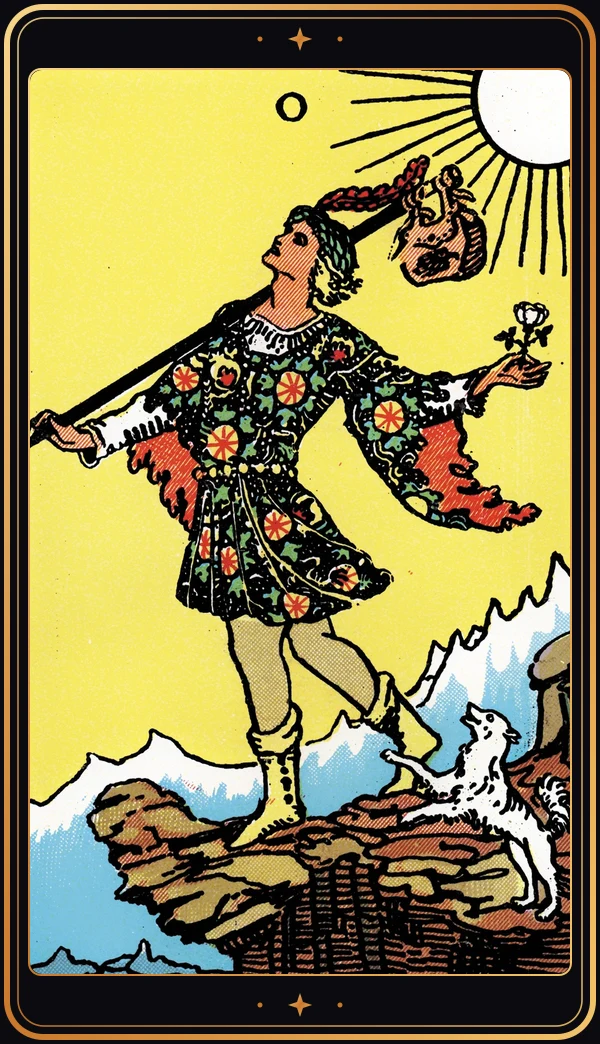
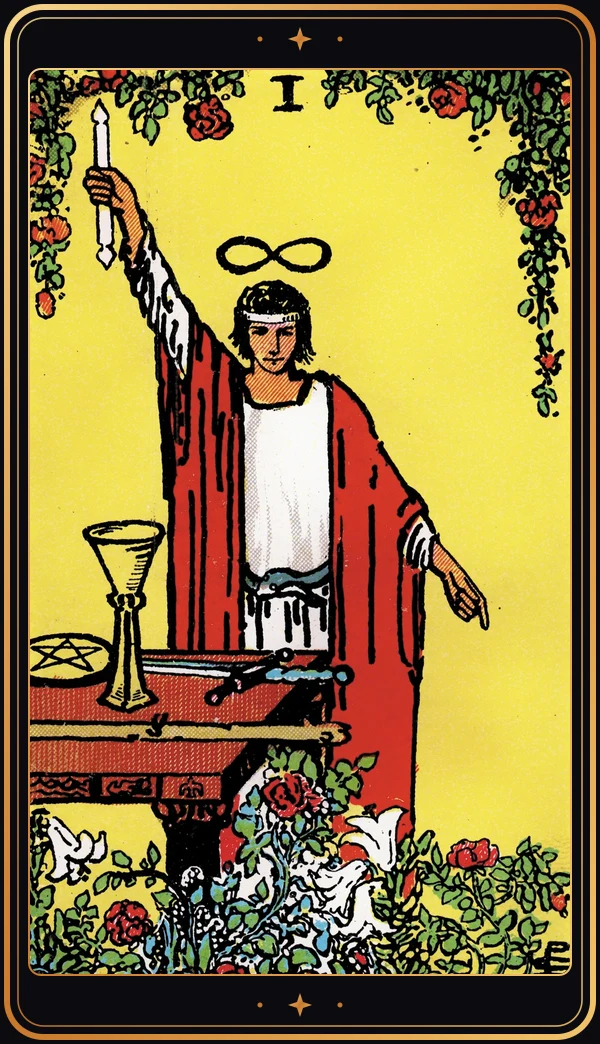
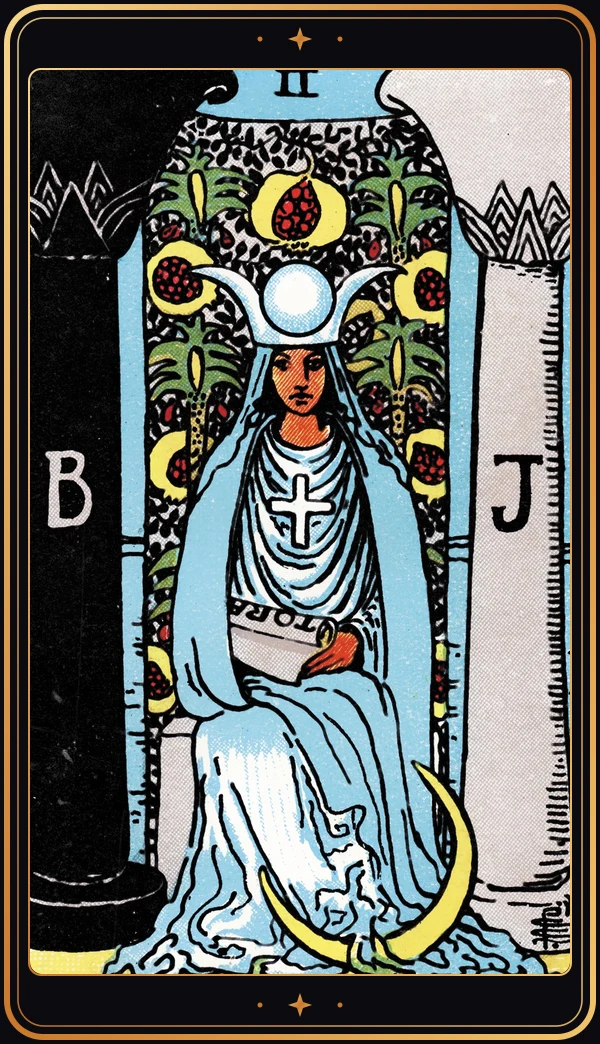
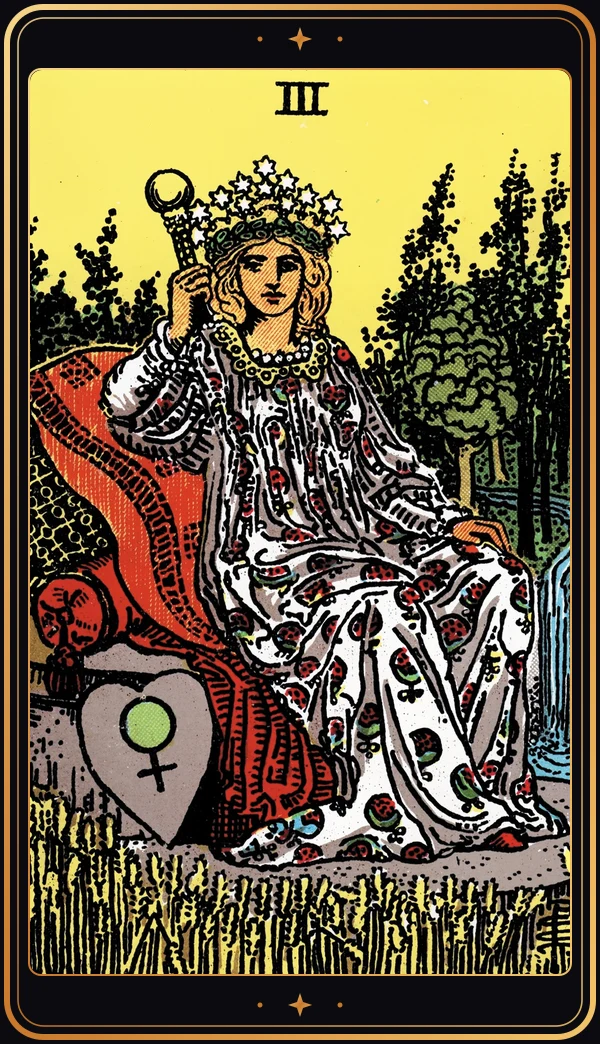
Start with the first stage, learning the world. The Fool (0) steps towards a cliff edge with a small bundle and a white dog: beginnings and trust. The Magician (I) has a cup, a coin, a sword and a wand on his table, one hand pointing up and one down: skill, using what you have. The High Priestess (II) sits between a dark pillar and a light one, a scroll half-hidden in her robe: intuition, what isn’t said yet. The Empress (III) rests among cushions in a field of ripe wheat: nurture and growth.
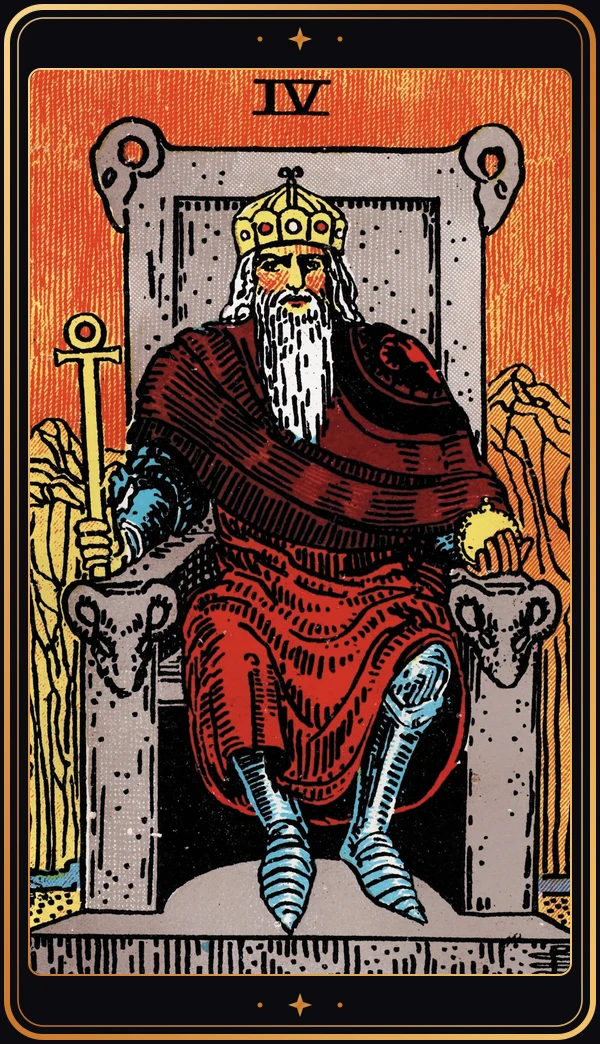
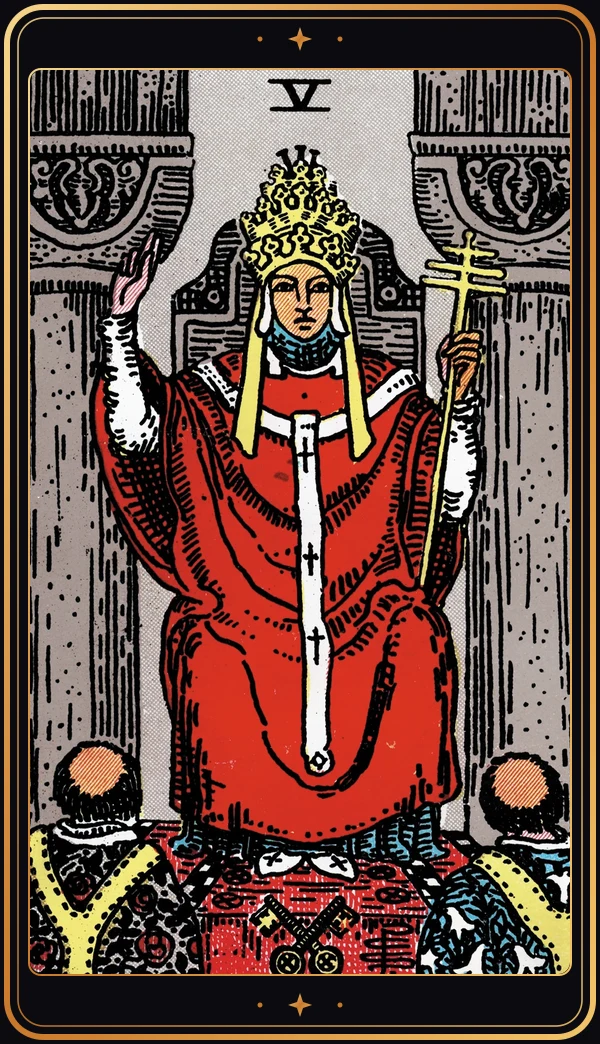
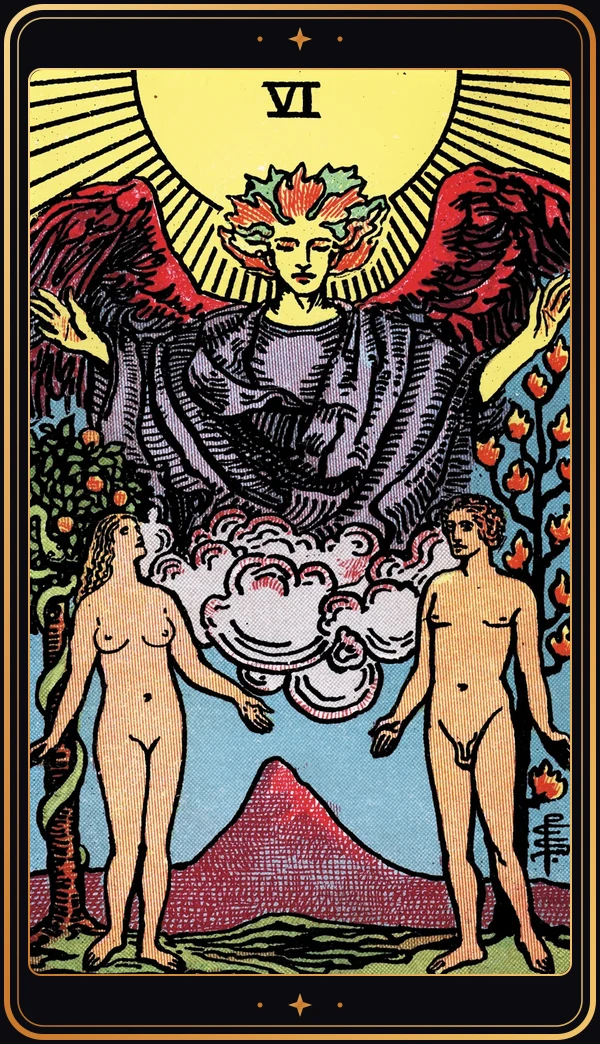
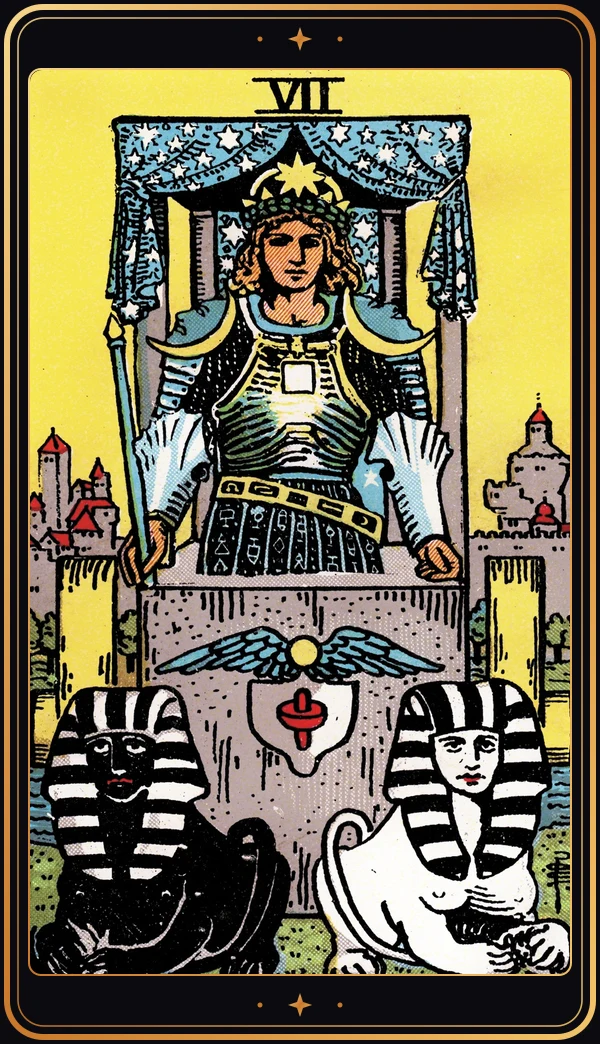
The Emperor (IV) sits on a stone throne carved with rams’ heads: structure and order. The Hierophant (V) raises a hand in blessing over two kneeling figures, crossed keys at his feet: tradition and teaching. The Lovers (VI) stand beneath a winged angel, a tree of fruit behind one and a tree of flames behind the other: relationships and choosing by your values. The Chariot (VII) is driven by a figure in armour, pulled by a black and a white sphinx with no reins: willpower and direction.
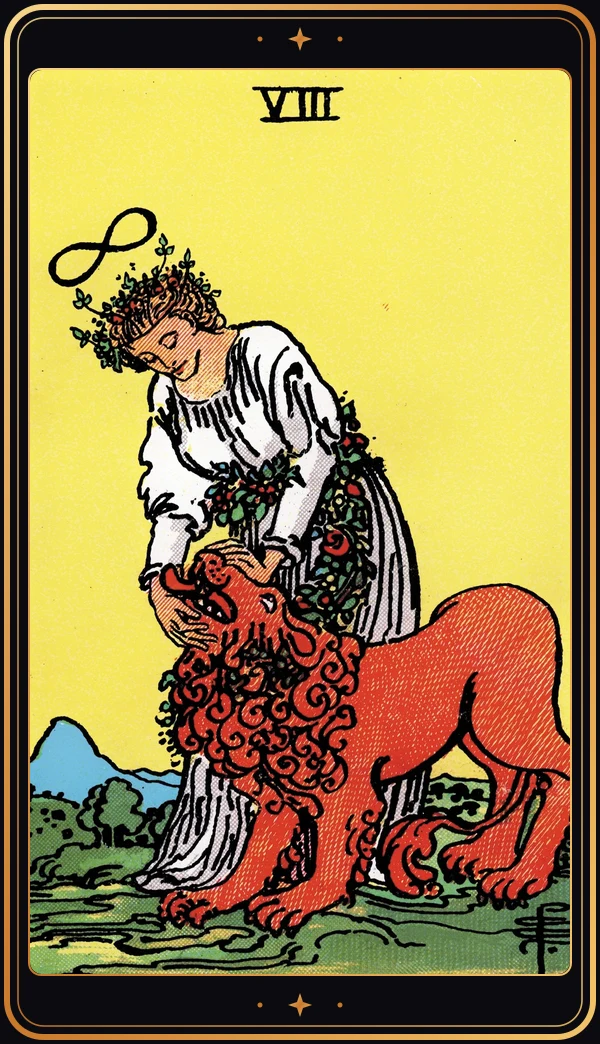
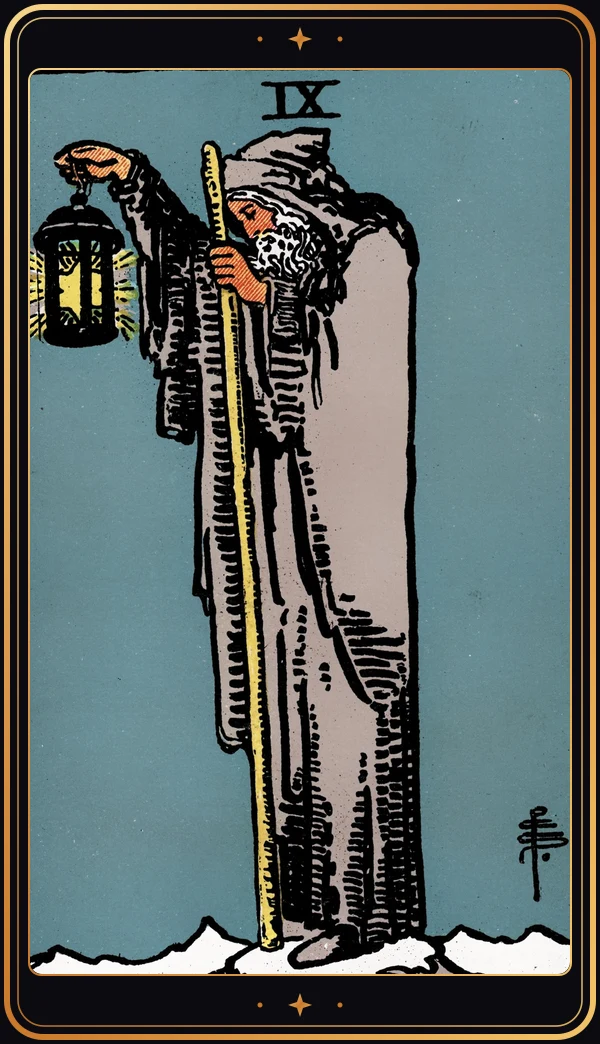
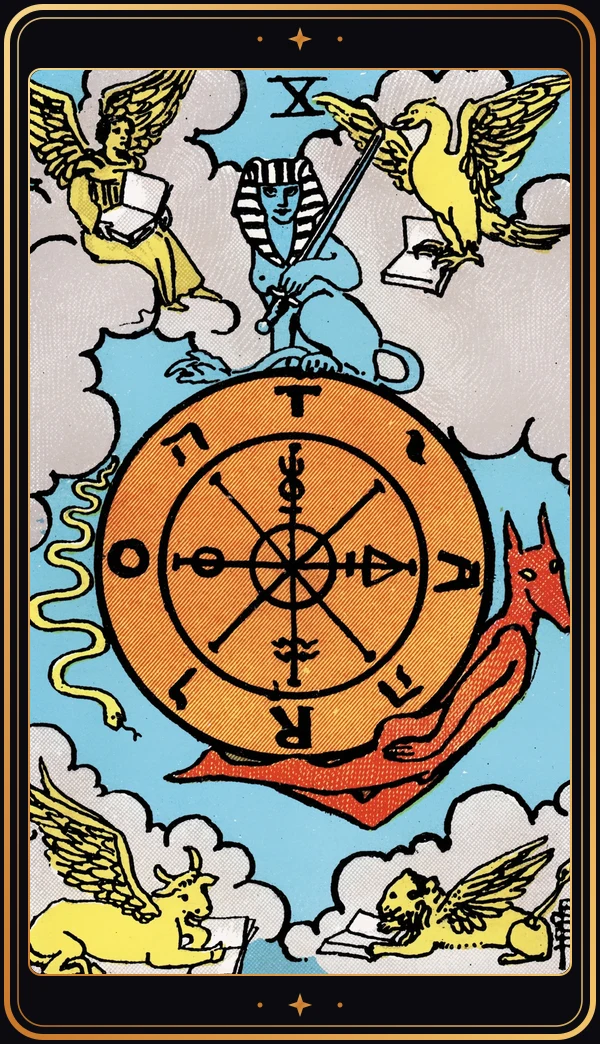
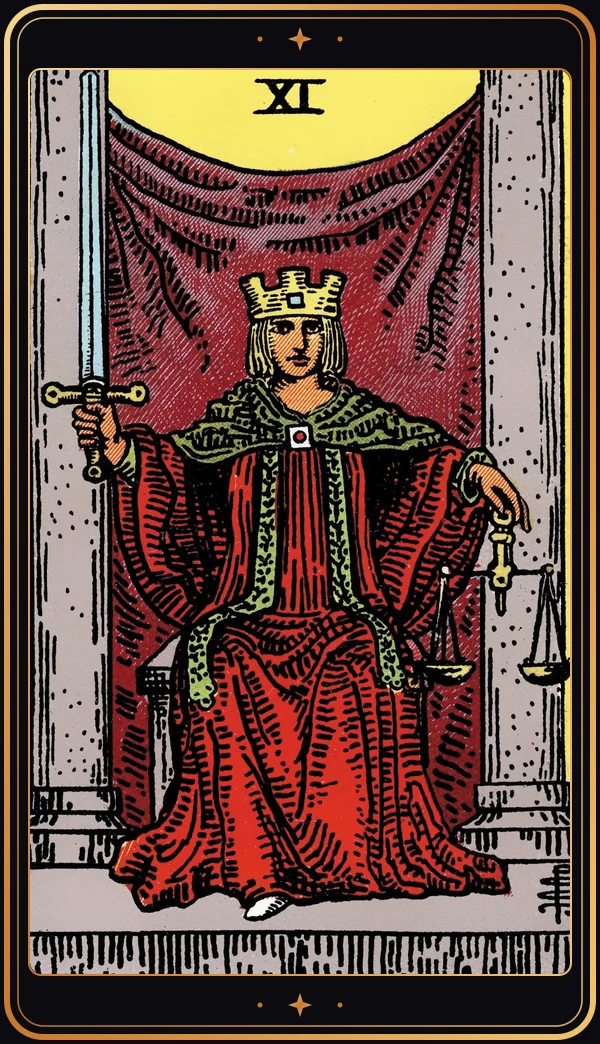
The second stage turns inward. In Strength (VIII), a woman calmly closes a lion’s jaws: gentle courage. The Hermit (IX) stands alone on a snowy peak, lantern raised: reflection. The Wheel of Fortune (X) turns in the clouds, with a sphinx on top and winged figures in the corners: cycles and change you can’t fully control. Justice (XI) holds an upright sword and scales between two pillars: fairness and truth.
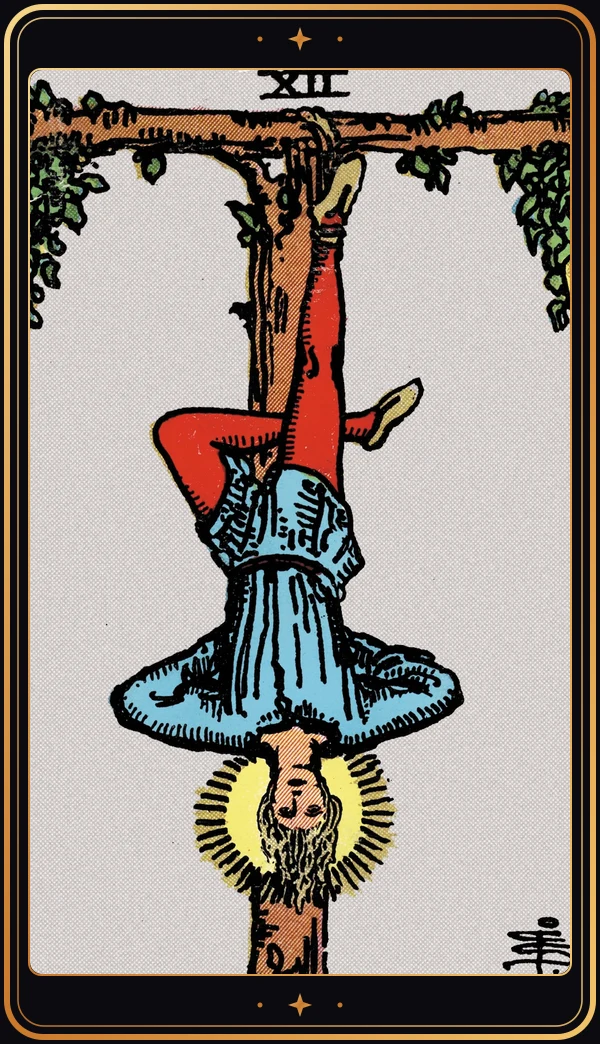
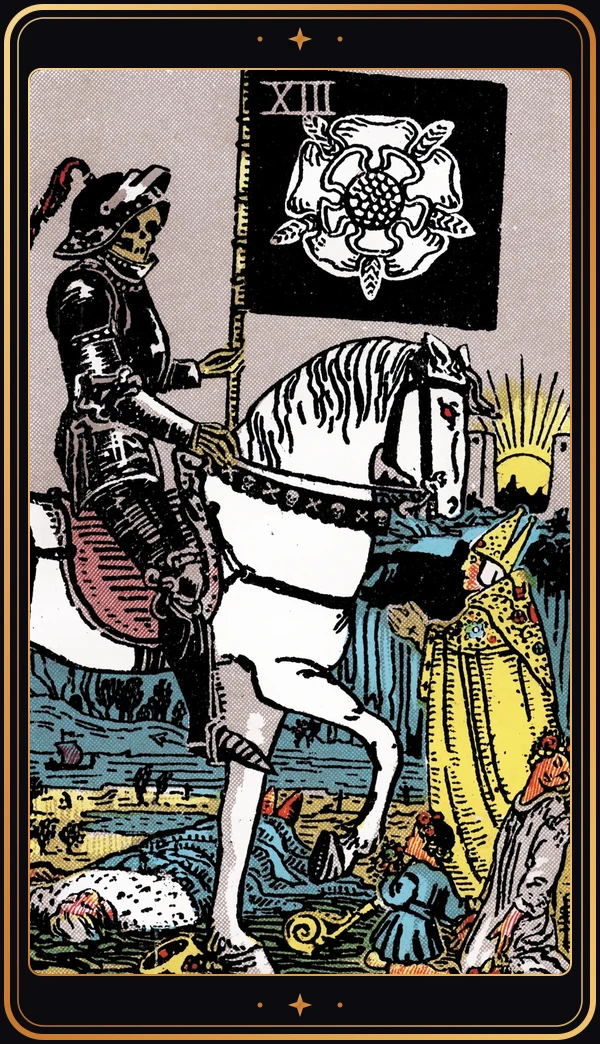
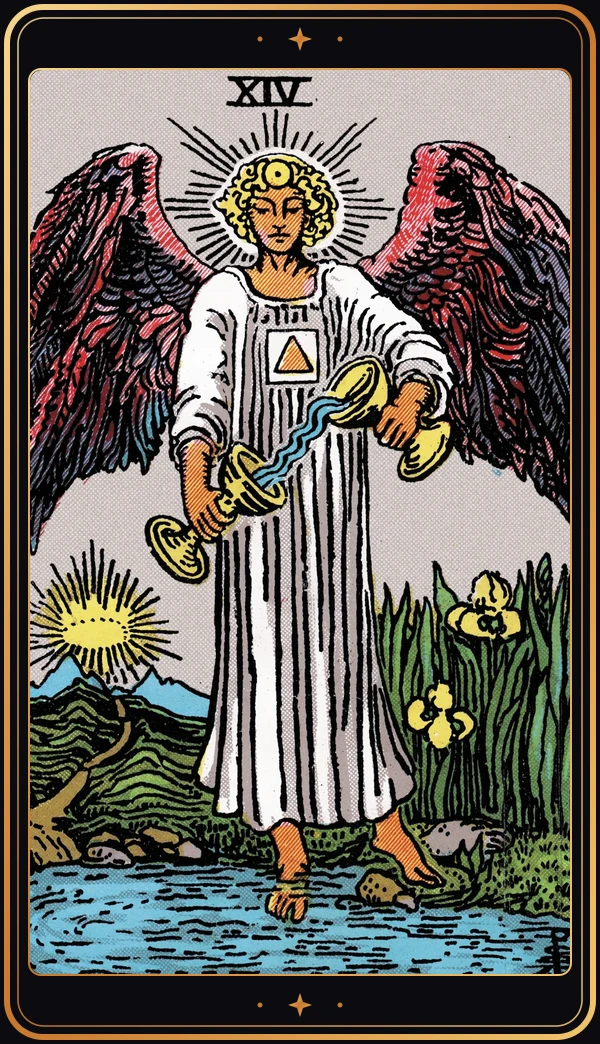
The Hanged Man (XII) hangs upside down by one foot from a living tree, calm, with light around his head: a pause and a new angle. Death (XIII) rides a white horse under a black banner with a white rose: endings that make room for something new, never a literal death. Temperance (XIV) shows an angel pouring water from one cup into another, one foot on land and one in the water: balance and the right mix.
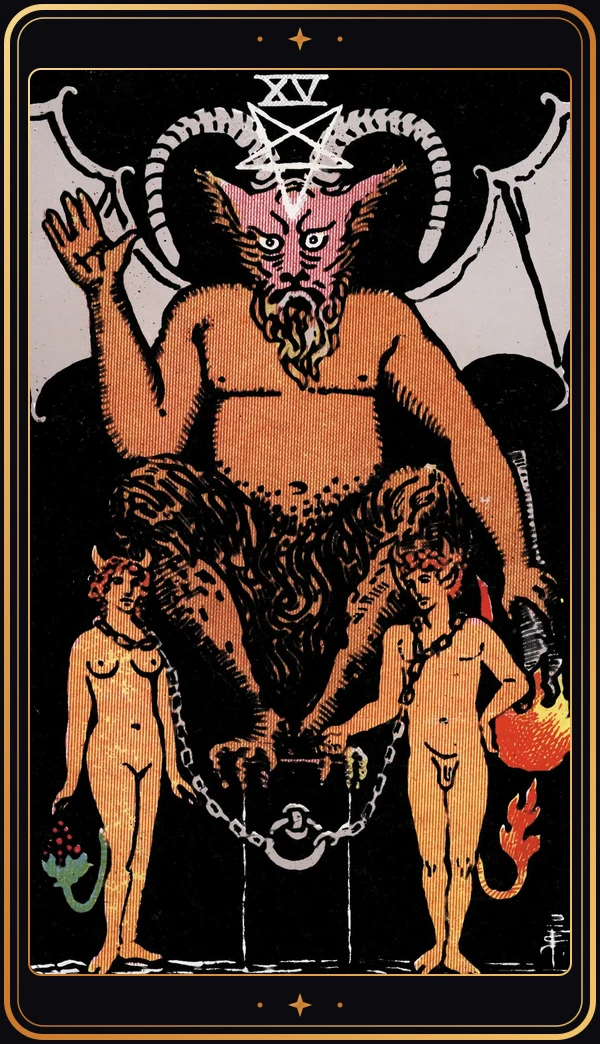
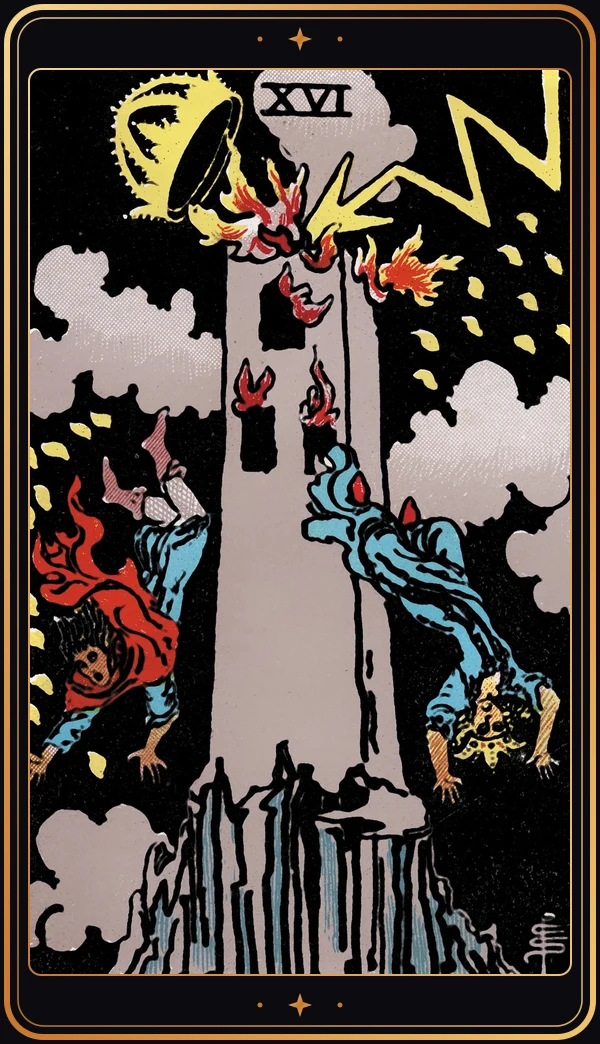
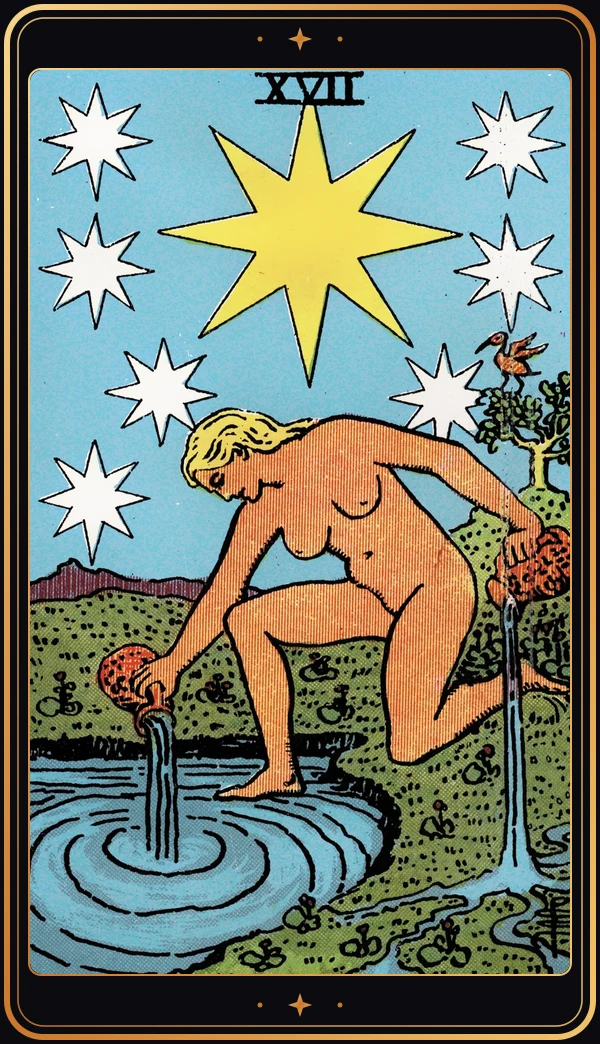
The third stage brings disruption and completion. The Devil (XV) crouches above two chained figures, but the chains hang loosely round their necks: habits you could lift off. The Tower (XVI) is struck by lightning, its crown-shaped top knocked off: sudden change, something shaky giving way. The Star (XVII) shows a figure kneeling by a pool under a large star, pouring water onto the land and into the pool: hope and healing.
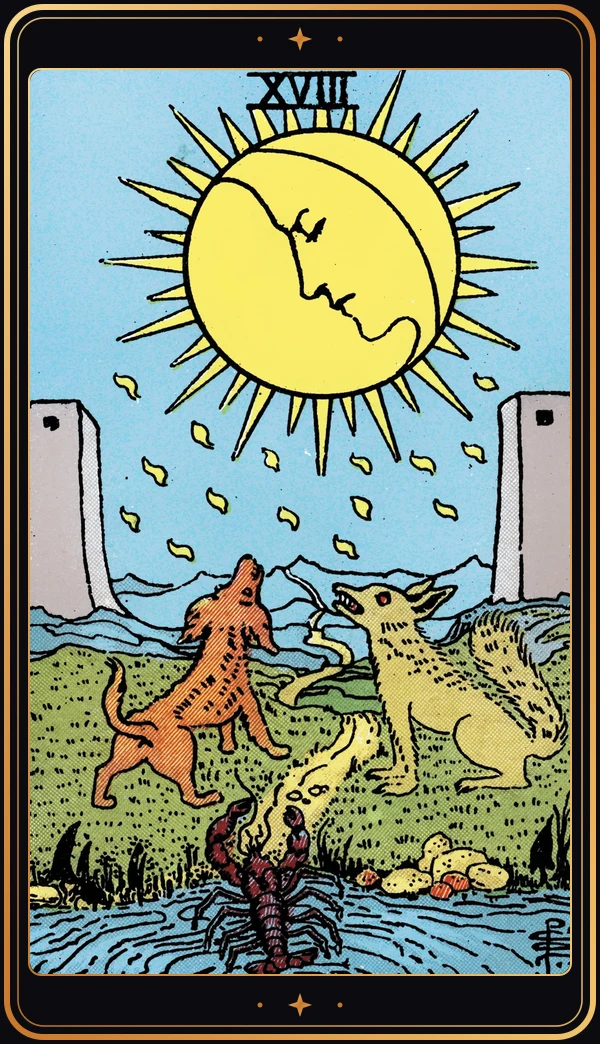
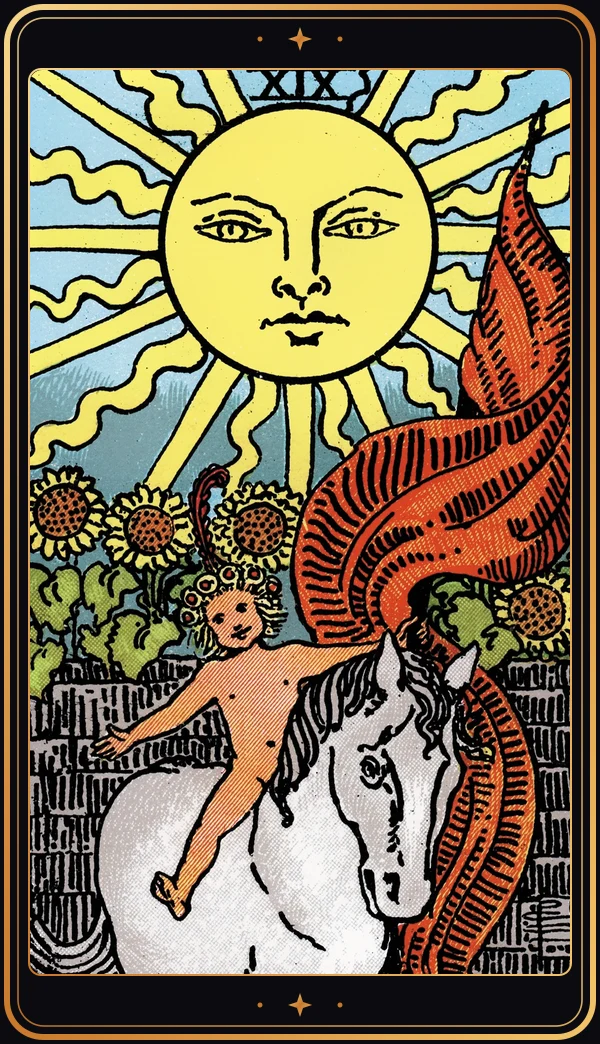
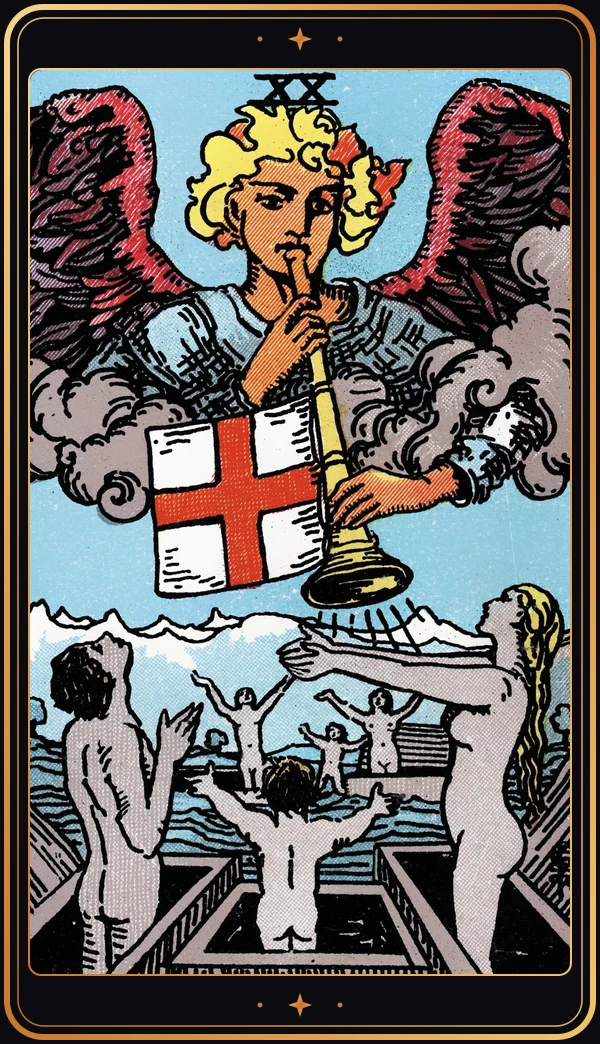
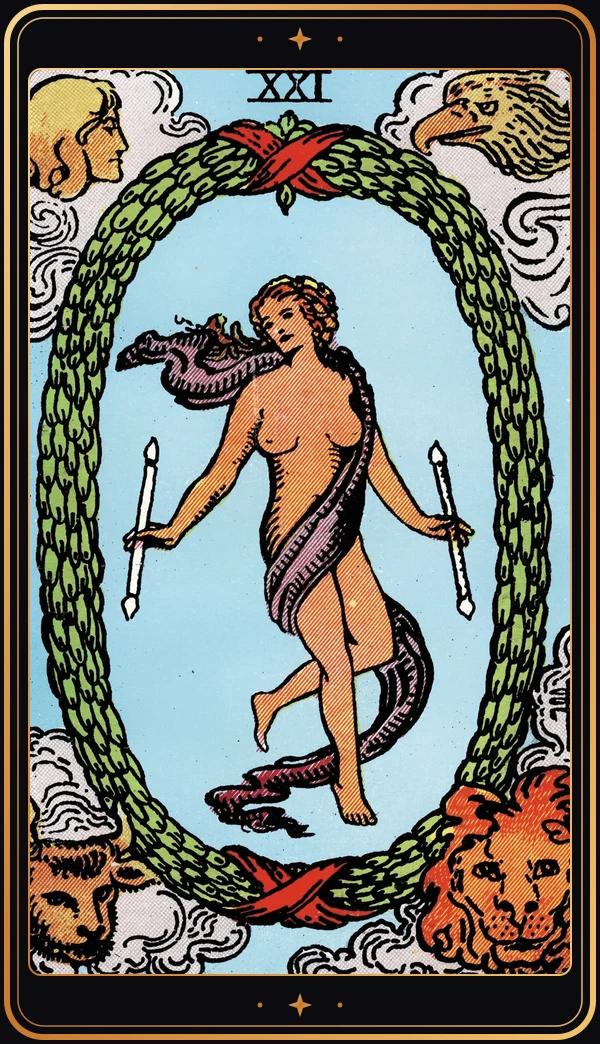
The Moon (XVIII) hangs over a path between two towers, with a dog and a wolf howling and a crayfish climbing out of the water: uncertainty, things not yet clear. The Sun (XIX) shines over a child riding a white horse in front of sunflowers: joy and feeling alive. Judgement (XX) shows an angel blowing a trumpet as figures rise with open arms: awakening and a calling. The World (XXI) shows a figure dancing inside a wreath, with four creatures in the corners: completion, and readiness to begin again.
That’s the whole set. If you remember one thing, make it the method: every theme above comes from something you can point to in the picture. When you meet a Major card you’ve forgotten, look first, and the theme usually comes back.
Your exercise
Practise reading a Major card’s theme from its picture. For each card, decide: which of the three themes grows out of what you see? You’ll see straight away if you’re right.
Key takeaways
- 1There are 22 Major cards, from the Fool (0) to the World (21), and each has one main theme.
- 2Every theme grows out of something you can point to in the picture.
- 3Dramatic-looking cards like Death, the Devil and the Tower describe change and patterns, not disasters.
- 4If you forget a card, look at the picture first; the theme usually comes back.